Current issue
Accepted manuscript
About the Journal
Scientific Council
Editorial Board
Regulatory and archival policy
Code of publishing ethics
Publisher
Information about the processing of personal data in relation to cookies and newsletter subscription
Archive
For Authors
For Reviewers
Contact
Reviewers
Annals reviewers in 2025
Annals reviewers in 2024
Annals reviewers in 2023
Annals reviewers in 2022
Annals reviewers in 2021
Annals reviewers in 2020
Annals reviewers in 2019
Annals reviewers in 2018
Annals reviewers in 2017
Annals reviewers in 2016
Annals reviewers in 2015
Annals reviewers in 2014
Annals reviewers in 2013
Annals reviewers in 2012
Links
Sklep Wydawnictwa SUM
Biblioteka Główna SUM
Śląski Uniwersytet Medyczny w Katowicach
Privacy policy
Accessibility statement
Reviewers
Annals reviewers in 2025
Annals reviewers in 2024
Annals reviewers in 2023
Annals reviewers in 2022
Annals reviewers in 2021
Annals reviewers in 2020
Annals reviewers in 2019
Annals reviewers in 2018
Annals reviewers in 2017
Annals reviewers in 2016
Annals reviewers in 2015
Annals reviewers in 2014
Annals reviewers in 2013
Annals reviewers in 2012

Artificial intelligence in neurosurgical education – current applications, opportunities and limitations: A narrative review
1
Students’ Scientific Club, Department of Neurosurgery, Faculty of Medical Sciences in Katowice,
Medical University of Silesia, Katowice, Poland
2
Department of Neurosurgery, Faculty of Medical Sciences in Katowice, Medical University of Silesia, Katowice, Poland
Corresponding author
Marta Strauchman
Studenckie Koło Naukowe, Klinika Neurochirurgii, Uniwersyteckie Centrum Kliniczne im. prof. K. Gibińskiego ŚUM, ul. Medyków 14, 40-752 Katowice
Studenckie Koło Naukowe, Klinika Neurochirurgii, Uniwersyteckie Centrum Kliniczne im. prof. K. Gibińskiego ŚUM, ul. Medyków 14, 40-752 Katowice

KEYWORDS
artificial intelligenceneurosurgical educationlarge language modelsvirtual reality simulationpersonalized learning
TOPICS
ABSTRACT
The evolution of artificial intelligence (AI) and large language models (LLMs) is updating medical and neurosurgical education. This narrative review provides an updated synthesis of recent applications of AI in neurosurgical education, with particular emphasis on LLMs, knowledge assessment, simulation-based training, automated competency evaluation, and implementation risks. Through machine learning, deep learning, and virtual reality systems, AI enables personalized, adaptive learning pathways, 24/7 on-demand academic assistance, and objective, data-driven competency evaluations in risk-free environments. In neurosurgery, intelligent surgical simulators and automated 3D spatial planning tools optimize technical execution and track procedural metrics. Generative AI streamlines curriculum design, literature synthesis, and examination drafting. However, the adoption of foundation models introduces critical limitations and risks. These systems remain vulnerable to hallucinations, logic confabulations, and fabricated bibliographic citations, which pose risks in high-stakes clinical contexts. Excessive dependence on AI can cause cognitive fatigue, diminish independent critical thinking, and elevate risks related to academic plagiarism, algorithmic bias, and data privacy. To address these challenges, continuous human verification is required. AI should function as a supportive, transparent assistant of human clinical judgment, ensuring that technological innovation reinforces core values of medical practice and patient safety.
FUNDING
This research received no external funding.
CONFLICT OF INTEREST
The authors declare no conflict of interest.
AUTHORS' CONTRIBUTIONS
Study design – M. Setlak, B. Błaszczyk, M. Stępień, M. Strauchman, A. Siodłak; Data collection – M. Stępień, M. Strauchman, A. Siodłak, M. Setlak; Manuscript preparation – M. Stępień, M. Strauchman, A. Siodłak, M. Setlak; Literature research – M. Stępień, M. Strauchman, A. Siodłak, M. Setlak; Final approval of the version to be published – M. Setlak, B. Błaszczyk, M. Stępień, M. Strauchman, A. Siodłak
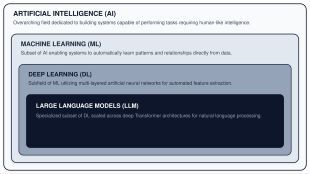
Use of AI tools statement: Google Gemini 3.5 Flash-Lite with Extended Thinking was used as an assistant tool for language editing and stylistic improvement of the manuscript text. It was also used in generating the SVG vector graphics code and layout formatting based on authors’ conceptual design and content specifications for the figures. The literature selection, interpretation and final approval of the manuscript were performed by the authors.
REFERENCES (70)
1.
Mesko B. The ChatGPT (Generative Artificial Intelligence) Revolution Has Made Artificial Intelligence Approachable for Medical Professionals. J Med Internet Res. 2023;25:e48392. doi: 10.2196/48392.
2.
Windermere SA, Shah S, Hey G, McGrath K, Rahman M. Applications of Artificial Intelligence in Neurosurgery for Improving Outcomes Through Diagnostics, Predictive Tools, and Resident Education. World Neurosurgery. 2025;197:123809. doi: 10.1016/j.wneu.2025.123809.
3.
Egli A. ChatGPT, GPT-4, and Other Large Language Models: The Next Revolution for Clinical Microbiology? Clin Infect Dis. 2023;77(9):1322–1328. doi: 10.1093/cid/ciad407.
4.
Thirunavukarasu AJ, Ting DSJ, Elangovan K, Gutierrez L, Tan TF, Ting DSW. Large language models in medicine. Nat Med. 2023;29(8):1930–1940. doi: 10.1038/s41591-023-02448-8.
5.
Mainz A, Nitsche J, Weirauch V, Meister S. Measuring the Digital Competence of Health Professionals: Scoping Review. JMIR Med Educ. 2024;10:e55737. doi: 10.2196/55737.
6.
Campanozzi LL, Gibelli F, Bailo P, Nittari G, Sirignano A, Ricci G. The role of digital literacy in achieving health equity in the third millennium society: A literature review. Front Public Health. 2023;11:1109323. doi: 10.3389/fpubh.2023.1109323.
7.
Harley JM, Tawakol T, Azher S, Quaiattini A, Del Maestro R. The role of artificial intelligence, performance metrics, and virtual reality in neurosurgical education: an umbrella review. Glob Surg Educ J Assoc Surg Educ. 2024;3(1):83. doi: 10.1007/s44186-024-00284-z.
8.
Piñera-Castro HJ, Borges-García C. Applications of artificial intelligence in neurosurgical education: a scoping review. Egypt J Neurol Psychiatry Neurosurg 2025;61:83. doi: 10.1186/s41983-025-01015-x.
9.
Haenlein M, Kaplan A. A Brief History of Artificial Intelligence: On the Past, Present, and Future of Artificial Intelligence. Calif Manag Rev. 2019;61(4):5–14. doi: 10.1177/0008125619864925.
10.
Choi RY, Coyner AS, Kalpathy-Cramer J, Chiang MF, Campbell JP. Introduction to Machine Learning, Neural Networks, and Deep Learning. Transl Vis Sci Technol. 2020;9(2):14. doi: 10.1167/tvst.9.2.14.
11.
Janiesch C, Zschech P, Heinrich K. Machine learning and deep learning. Electron Mark. 2021;31(3):685–695. doi: 10.1007/s12525-021-00475-2.
12.
Taye MM. Understanding of Machine Learning with Deep Learning: Architectures, Workflow, Applications and Future Directions. Computers. 2023;12(5):91. doi: 10.3390/computers12050091.
13.
Zhao WX, Zhou K, Li J, Tang T, Wang X, Hou Y, et al. A Survey of Large Language Models. arXiv. Preprint posted online March 18, 2026. doi: 10.48550/arXiv.2303.18223.
14.
Kumar P. Large language models (LLMs): survey, technical frameworks, and future challenges. Artif Intell Rev. 2024;57(10):260. doi: 10.1007/s10462-024-10888-y.
15.
Naveed H, Khan AU, Qiu S, Saqib M, Anwar S, Usman M, et al. A Comprehensive Overview of Large Language Models. arXiv. Preprint posted online October 17, 2024. doi: 10.48550/arXiv.2307.06435.
16.
Abd-Alrazaq A, AlSaad R, Alhuwail D, Ahmed A, Healy PM, Latifi S, et al. Large Language Models in Medical Education: Opportunities, Challenges, and Future Directions. JMIR Med Educ. 2023;9:e48291. doi: 10.2196/48291.
17.
Zhang Q, Huang Z, Huang Y, Wang G, Zhang R, Yang J, et al. Generative AI in medical education: feasibility and educational value of LLM-generated clinical cases with MCQs. BMC Med Educ. 2025;25(1):1502. doi: 10.1186/s12909-025-08085-8.
18.
Kıyak YS, Emekli E. ChatGPT prompts for generating multiple-choice questions in medical education and evidence on their validity: a literature review. Postgrad Med J. 2024;100(1189):858–865. doi: 10.1093/postmj/qgae065.
19.
Law AK, So J, Lui CT, Choi YF, Cheung KH, Kei-Ching Hung K, et al. AI versus human-generated multiple-choice questions for medical education: a cohort study in a high-stakes examination. BMC Med Educ. 2025;25(1):208. doi: 10.1186/s12909-025-06796-6.
20.
Artsi Y, Sorin V, Konen E, Glicksberg BS, Nadkarni G, Klang E. Large language models for generating medical examinations: systematic review. BMC Med Educ. 2024;24(1):354. doi: 10.1186/s12909-024-05239-y.
21.
Van Veen D, Van Uden C, Blankemeier L, Delbrouck JB, Aali A, Bluethgen C, et al. Adapted large language models can outperform medical experts in clinical text summarization. Nat Med. 2024;30(4):1134–1142. doi: 10.1038/s41591-024-02855-5.
22.
Tang L, Sun Z, Idnay B, Nestor JG, Soroush A, Elias PA, et al. Evaluating Large Language Models on Medical Evidence Summarization. medRxiv [Preprint]. 2023;2023.04.22.23288967. doi: 10.1101/2023.04.22.23288967.
23.
Thesen T, Park SH. A generative AI teaching assistant for personalized learning in medical education. NPJ Digit Med. 2025;8(1):627. doi: 10.1038/s41746-025-02022-1.
24.
Çamlar M, Sevgi UT, Erol G, Karakaş F, Doğruel Y, Güngör A. Comparative performance of neurosurgery-specific, peer-reviewed versus general AI chatbots in bilingual board examinations: evaluating accuracy, consistency, and error minimization strategies. Acta Neurochir. 2025;167(1):241. doi: 10.1007/s00701-025-06628-y.
25.
Moglia A, Georgiou K, Cerveri P, Mainardi L, Satava RM, Cuschieri A. Large language models in healthcare: from a systematic review on medical examinations to a comparative analysis on fundamentals of robotic surgery online test. Artif Intell Rev. 2024;57(9):231. doi: 10.1007/s10462-024-10849-5.
26.
Xu X, Chen Y, Miao J. Opportunities, challenges, and future directions of large language models, including ChatGPT in medical education: a systematic scoping review. J Educ Eval Health Prof. 2024;21:6. doi: 10.3352/jeehp.2024.21.6.
27.
Meng X, Yan X, Zhang K, Liu D, Cui X, Yang Y, et al. The application of large language models in medicine: A scoping review. iScience. 2024;27(5):109713. doi: 10.1016/j.isci.2024.109713.
28.
Vishwanath K, Alyakin A, Ghosh M, Lee JV, Alber DA, Sangwon KL, et al. Evaluating the performance and fragility of large language models on the self-assessment for neurological surgeons. arXiv. Preprint posted online 29 May 2025. doi: 10.48550/arXiv.2505.23477.
29.
Isikay I, Cekic E, Baylarov B, Tunc O, Hanalioglu S. Narrative review of patient-specific 3D visualization and reality technologies in skull base neurosurgery: enhancements in surgical training, planning, and navigation. Front Surg. 2024;11:1427844. doi: 10.3389/fsurg.2024.1427844.
30.
Khalifa A, Tahhan O, Albazooni M, Saeed M, Hamdi R, Stanners M, et al. Automated and Artificial Intelligence (AI)-Derived Performance Assessment in Surgical Simulation: A Systematic Review. Cureus. 2025;17(12):e100477. doi: 10.7759/cureus.100477.
31.
Li F, Qin Z, Qian K, Liang S, Li C, Tai Y. Personalized assessment and training of neurosurgical skills in virtual reality: An interpretable machine learning approach. Virtual Real Intell Hardw. 2024;6(1):17–29. doi: 10.1016/j.vrih.2023.08.001.
32.
Halman J, Tencer S, Siemiński M. Artificial Intelligence and Extended Reality in the Training of Vascular Surgeons: A Narrative Review. Med Sci. 2025;13(3):126. doi: 10.3390/medsci13030126.
33.
Mirchi N, Bissonnette V, Yilmaz R, Ledwos N, Winkler-Schwartz A, Del Maestro RF. The Virtual Operative Assistant: An explainable artificial intelligence tool for simulation-based training in surgery and medicine. PLoS One. 2020;15(2):e0229596. doi: 10.1371/journal.pone.0229596.
34.
Hanna F, Gad MM, Helmy MBF, Eisa MM, Omran MWZ, Youssef M, et al. Artificial intelligence augmented tutoring vs expert instruction on learning simulated general surgical skills: a systematic review and meta-analysis. BMC Med Educ. 2026;26(1):952. doi: 10.1186/s12909-026-09606-9.
35.
Yilmaz R, Bakhaidar M, Alsayegh A, Hamdan NA, Fazlollahi AM, Tee T, et al. Real-Time multifaceted artificial intelligence vs In-Person instruction in teaching surgical technical skills: a randomized controlled trial. Sci Rep. 2024;14(1):15130. doi: 10.1038/s41598-024-65716-8.
36.
Natali C, Marconi L, Dias Duran LD, Cabitza F. AI-induced Deskilling in Medicine: A Mixed-Method Review and Research Agenda for Healthcare and Beyond. Artif Intell Rev. 2025;58(11):356. doi: 10.1007/s10462-025-11352-1.
37.
Ranabhat RK, Ross TD, Jiao T, Larouche J, Finkelstein J, Hardisty M. Virtual-reality based patient-specific simulation of spine surgical procedures: A fast, highly automated and high-fidelity system for surgical education and planning. arXiv. Preprint posted online April 29, 2026. doi: 10.48550/arXiv.2604.26781.
38.
Roh TH, Choi S, Moon JH, Kim EH, Kang SG, Chang JH. Extended Reality in Neurosurgery : Surgical Planning, Navigation, Education, and Patient Communication. J Korean Neurosurg Soc. 2026;69(3):349–360. doi: 10.3340/jkns.2026.0047.
39.
Saher L, Asif A, Mehmood Z, Fatima SS, Nizam R. Virtual Reality in Neurosurgery: Advancing Training, Education, and Surgical Planning. Asian J Neurosurg. 2025;21(1):26–37. doi: 10.1055/s-0045-1813259.
40.
Gwon YN, Kim JH, Chung HS, Jung EJ, Chun J, Lee S, et al. The Use of Generative AI for Scientific Literature Searches for Systematic Reviews: ChatGPT and Microsoft Bing AI Performance Evaluation. JMIR Med Inform. 2024;12:e51187. doi: 10.2196/51187.
41.
Sollini M, Pini C, Lazar A, Gelardi F, Ninatti G, Bauckneht M, et al. Human researchers are superior to large language models in writing a medical systematic review in a comparative multitask assessment. Sci Rep. 2025;16(1):173. doi: 10.1038/s41598-025-28993-5.
42.
Ahn S. The transformative impact of large language models on medical writing and publishing: current applications, challenges and future directions. Korean J Physiol Pharmacol. 2024;28(5):393–401. doi: 10.4196/kjpp.2024.28.5.393.
43.
Lieberum JL, Toews M, Metzendorf MI, Heilmeyer F, Siemens W, Haverkamp C, et al. Large language models for conducting systematic reviews: on the rise, but not yet ready for use-a scoping review. J Clin Epidemiol 2025;181:111746 doi: 10.1016/j.jclinepi.2025.111746.
44.
Akintola AS, Akintayo M, Kadri T, Oforgu CM, Michael M, Nwanna M. Adaptive AI Systems in Education: Real-Time Personalised Learning Pathways for Skill Development. Artif Intell Mach Learn Data Sci 2025;3(1):2489–2494. doi: 10.51219/JAIMLD/Akinyemi-Sadeeq-Akintola/534.
45.
Vrdoljak J, Boban Z, Vilović M, Kumrić M, Božić J. A Review of Large Language Models in Medical Education, Clinical Decision Support, and Healthcare Administration. Healthcare. 2025;13(6):603. doi: 10.3390/healthcare13060603.
46.
Yarlagadda KC. AI in Education: Personalized Learning and Intelligent Tutoring Systems. EJCSIT. 2025;13(32):15–27. doi: 10.37745/ejcsit.2013/vol13n321527.
47.
Michalczak M, Zgoda W, Michalczak J, Żądło A, Nasser A, Tokarek T. Artificial Intelligence in Medical Education: A Narrative Review. AI. 2025;6(12):322. doi: 10.3390/ai6120322.
48.
Hariyanto, Kristianingsih FXD, Maharani R. Artificial intelligence in adaptive education: a systematic review of techniques for personalized learning. Discov Educ. 2025;4(1):458. doi: 10.1007/s44217-025-00908-6.
49.
Strielkowski W, Grebennikova V, Lisovskiy A, Rakhimova G, Vasileva T. AI ‐driven adaptive learning for sustainable educational transformation. Sustainable Development. 2025;33(2):1921–1947. doi: 10.1002/sd.3221.
50.
Sami A, Tanveer F, Sajwani K, Kiran N, Javed MA, Ozsahin DU, et al. Medical students’ attitudes toward AI in education: perception, effectiveness, and its credibility. BMC Med Educ. 2025;25(1):82. doi: 10.1186/s12909-025-06704-y.
51.
Fitas R. Inclusive education with AI: supporting special needs and tackling language barriers. AI Ethics. 2025;5(6):5729–5757. doi: 10.1007/s43681-025-00824-3.
52.
Kim Y, Jeong H, Chen S, Li SS, Park C, Lu M, et al. Medical Hallucinations in Foundation Models and Their Impact on Healthcare. arXiv. Preprint posted online November 2, 2025. doi: 10.48550/arXiv.2503.05777.
53.
Farquhar S, Kossen J, Kuhn L, Gal Y. Detecting hallucinations in large language models using semantic entropy. Nature. 2024;630(8017):625–630. doi: 10.1038/s41586-024-07421-0.
54.
Danyaro KU, Abdullahi S, Abdallah AS, Chiroma H. Hallucinations in Large Language Models for Education: Challenges and Mitigation. IJTLE. 2025;4(6):13–19. doi: 10.22161/ijtle.4.6.2.
55.
Bélisle-Pipon JC. Why we need to be careful with LLMs in medicine. Front Med. 2024;11:1495582. doi: 10.3389/fmed.2024.1495582.
56.
Li X, Yan X, Lai H. The ethical challenges in the integration of artificial intelligence and large language models in medical education: A scoping review. PLoS One. 2025;20(10):e0333411. doi: 10.1371/journal.pone.0333411.
57.
Tian J, Zhang R. Learners’ AI dependence and critical thinking: The psychological mechanism of fatigue and the social buffering role of AI literacy. Acta Psychol. 2025;260:105725. doi: 10.1016/j.actpsy.2025.105725.
58.
Zhai C, Wibowo S, Li LD. The effects of over-reliance on AI dialogue systems on students’ cognitive abilities: a systematic review. Smart Learn Environ. 2024;11(1):28. doi: 10.1186/s40561-024-00316-7.
59.
Williams RT. The ethical implications of using generative chatbots in higher education. Front Educ. 2024;8:1331607. doi: 10.3389/feduc.2023.1331607.
60.
Kofinas AK, Tsay CHH, Pike D. The impact of generative AI on academic integrity of authentic assessments within a higher education context. Brit J Educ Technol. 2025;56(6):2522–2549. doi: 10.1111/bjet.13585.
61.
Chen Y, Esmaeilzadeh P. Generative AI in Medical Practice: In-Depth Exploration of Privacy and Security Challenges. J Med Internet Res. 2024;26:e53008. doi: 10.2196/53008.
62.
Izquierdo-Condoy JS, Arias-Intriago M, Montero Corrales L, Ortiz-Prado E. Artificial Intelligence in Medical Education: Transformative Potential, Current Applications, and Future Implications. JMIR Med Educ. 2026;12:e77127-e77127. doi: 10.2196/77127.
63.
Khakpaki A. Advancements in artificial intelligence transforming medical education: a comprehensive overview. Med Educ Online. 2025;30(1):2542807. doi: 10.1080/10872981.2025.2542807.
64.
Sriram A, Ramachandran K, Krishnamoorthy S. Artificial Intelligence in Medical Education: Transforming Learning and Practice. Cureus. 2025;17(3):e80852. doi: 10.7759/cureus.80852.
65.
Tsang MO, Dai SCK. Artificial Intelligence–Driven Personalised Surgical Curricula for Medical Students. Premier Journal of Science 2025;14:100189. doi: 10.70389/PJS.100189.
66.
Chance EA. The combined impact of AI and VR on interdisciplinary learning and patient safety in healthcare education: a narrative review. BMC Med Educ. 2025;25(1):1039. doi: 10.1186/s12909-025-07589-7.
67.
Mergen M, Graf N, Meyerheim M. Reviewing the current state of virtual reality integration in medical education – a scoping review. BMC Med Educ. 2024;24(1):788. doi: 10.1186/s12909-024-05777-5.
68.
Raghavan N, Patel PC, Limon D, Morris MX, Kempenich JW, Rajesh A. Artificial Intelligence in Surgical Education: A 2025 Update on Adaptive Training, Feedback, and Competency-Based Education. Am Surg. 2026;92(3):675–686. doi: 10.1177/00031348251397597.
69.
Sankar S, Rabbi KA, Crosby RF, Rajhi YA, Karunaratne V, Rathnayake M, et al. Artificial Intelligence in Neurosurgical Training: Applications, Challenges, and Future Directions. Asian J Neurosurg. Published online June 30, 2026. doi: 10.1055/s-0046-1824448.
70.
Leal JA. Artificial Intelligence in Orthopaedic and Trauma Surgery Education: Applications, Ethics, and Future Perspectives. J Am Acad Orthop Surg Glob Res Rev. 2025;9(9):e25.00174. doi: 10.5435/JAAOSGlobal-D-25-00174.
Share
RELATED ARTICLE
| eISSN: | 1734-025X |


The Medical University of Silesia in Katowice, as the Operator of the annales.sum.edu.pl website, processes personal data collected when visiting the website. The function of obtaining information about Users and their behavior is carried out by voluntarily entered information in forms, saving cookies in end devices, as well as by collecting web server logs, which are in the possession of the website Operator. Data, including cookies, are used to provide services in accordance with the Privacy policy.
You can consent to the processing of data for these purposes, refuse consent or access more detailed information.
You can consent to the processing of data for these purposes, refuse consent or access more detailed information.