Current issue
Accepted manuscript
About the Journal
Scientific Council
Editorial Board
Regulatory and archival policy
Code of publishing ethics
Publisher
Information about the processing of personal data in relation to cookies and newsletter subscription
Archive
For Authors
For Reviewers
Contact
Reviewers
Annals reviewers in 2025
Annals reviewers in 2024
Annals reviewers in 2023
Annals reviewers in 2022
Annals reviewers in 2021
Annals reviewers in 2020
Annals reviewers in 2019
Annals reviewers in 2018
Annals reviewers in 2017
Annals reviewers in 2016
Annals reviewers in 2015
Annals reviewers in 2014
Annals reviewers in 2013
Annals reviewers in 2012
Links
Sklep Wydawnictwa SUM
Biblioteka Główna SUM
Śląski Uniwersytet Medyczny w Katowicach
Privacy policy
Accessibility statement
Reviewers
Annals reviewers in 2025
Annals reviewers in 2024
Annals reviewers in 2023
Annals reviewers in 2022
Annals reviewers in 2021
Annals reviewers in 2020
Annals reviewers in 2019
Annals reviewers in 2018
Annals reviewers in 2017
Annals reviewers in 2016
Annals reviewers in 2015
Annals reviewers in 2014
Annals reviewers in 2013
Annals reviewers in 2012

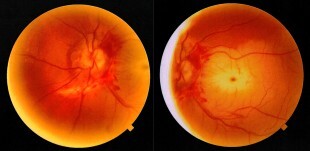
Choroidal rupture after blunt ocular trauma in a 21-year-old patient: Case report
1
Students' Scientific Club, Department of Ophthalmology, Faculty of Medical Sciences in Katowice, Medical University of Silesia, Katowice, Poland
2
Department of Ophthalmology, Faculty of Medical Sciences in Katowice, Medical University of Silesia, Katowice, Poland
3
Department of Adult Ophthalmology, Prof. Kornel Gibinski University Clinical Center, Medical University of Silesia, Katowice, Poland
Corresponding author
Natalia Kwaśniewska
Studenckie Koło Naukowe, Klinika Okulistyki, Wydział Nauk Medycznych w Katowicach, ul. Ceglana 35, 40-514 Katowice
Studenckie Koło Naukowe, Klinika Okulistyki, Wydział Nauk Medycznych w Katowicach, ul. Ceglana 35, 40-514 Katowice

KEYWORDS
TOPICS
ABSTRACT
A choroidal rupture is a disruption of the continuity of the Bruch’s membrane and the retinal pigment epithelium, most commonly associated with blunt ocular trauma. It occurs in 5–10% of patients after globe injury, more frequently in men and during work-related activities or physical exercises. A 21-year-old patient presented to the Emergency Department after sustaining blunt trauma to the left eye caused by being struck with a mobile phone. On admission, best-corrected visual acuity (BCVA) was 0.01, and intraocular pressure was 39 mmHg. Ophthalmic examination revealed subluxation of the crystalline lens, prolapse of the vitreous body into the anterior chamber and a choroidal rupture. Flash visual evoked potentials (VEP) showed normal latencies. However, the amplitude in the left eye was reduced to 50%. Fundus examination of the left eye demonstrated a rupture with displacement of the vascular bundle, signs of fibrosis, retinal hemorrhages, choroidal rupture, post-hemorrhagic vitreous opacities and macular edema. Fluorescein angiography revealed preserved flow in the major vessels, an area of hypo- and hyperfluorescence in the peripapillary region and scattered foci of blocked fluorescence inferiorly corresponding to dispersed hemorrhages. Based on the clinical presentation and ancillary test results, systemic and topical treatment was initiated, resulting in clinical improvement. Visual acuity remained at 0.01, while intraocular pressure decreased to 16 mmHg following pharmacological therapy.
Post-traumatic choroidal rupture frequently coexists with other ocular structural injuries. It requires comprehensive diagnostic evaluation and management and the prognosis depends on the location and extent of the lesions as well as appropriately selected pharmacotherapy.
Use of AI tools statement: To translate the text from Polish into English, the authors used ChatGPT.
REFERENCES (14)
1.
Singh S, Saxena S. Unraveling the perplexities of choroidal rupture. Indian J Ophthalmol. 2023;71(6):2602–2603. doi: 10.4103/IJO.IJO_326_23.
2.
Lupidi M, Muzi A, Castellucci G, Kalra G, Piccolino FC, Chhablani J, et al. The choroidal rupture: current concepts and insights. Surv Ophthalmol. 2021;66(5):761–770. doi: 10.1016/j.survophthal.2021.01.014.
3.
Mohseni M, Blair K, Gurnani B, Bragg BN. Blunt Eye Trauma. 2023 Jun 11. In: StatPearls [Internet]. Treasure Island (FL): StatPearls Publishing; 2025 Jan–.
4.
Patel MM, Chee YE, Eliott D. Choroidal rupture: a review. Int Ophthalmol Clin 2013;53(4):69–78. doi: 10.1097/IIO.0b013e31829ced74.
5.
Barth T, Zeman F, Helbig H, Gamulescu MA. Intravitreal anti-VEGF treatment for choroidal neovascularization secondary to traumatic choroidal rupture. BMC Ophthalmol. 2019;19(1):239. doi: 10.1186/s12886-019-1242-7.
6.
Razeghinejad R, Lin MM, Lee D, Katz LJ, Myers JS. Pathophysiology and management of glaucoma and ocular hypertension related to trauma. Surv Ophthalmol. 2020;65(5):530–547. doi: 10.1016/j.survophthal.2020.02.003.
7.
Ng JK, Lau O. Traumatic Glaucoma. 2023 Aug 14. In: StatPearls [Internet]. Treasure Island (FL): StatPearls Publishing; 2025 Jan–.
8.
Tabatabaei SA, Soleimani M, Alizadeh M, Movasat M, Mansoori MR, Alami Z, et al. Predictive value of visual evoked potentials, relative afferent pupillary defect, and orbital fractures in patients with traumatic optic neuropathy. Clin Ophthalmol. 2011;5:1021–1026. doi: 10.2147/OPTH.S21409.
9.
He M, Yang Z, Shi Z, Chen Y, Zhao X. Clinical features, management, and prognosis factors of traumatic optic neuropathy. Surv Ophthalmol. 2026;71(1):168–178. doi: 10.1016/j.survophthal.2025.07.012.
10.
Blanch RJ, Joseph IJ, Cockerham K. Traumatic optic neuropathy management: a systematic review. Eye (Lond). 2024;38(12):2312–2318. doi: 10.1038/s41433-024-03129-7.
11.
Weinreb RN, Aung T, Medeiros FA. The pathophysiology and treatment of glaucoma: a review. JAMA. 2014;311(18):1901–1911. doi: 10.1001/jama.2014.3192.
12.
Hapca MC, Muntean GA, Nemeș-Drăgan IA, Vesa ȘC, Nicoară SD. Visual Outcomes of Traumatic Lens Dislocations and Subluxations Managed by Pars Plana Vitrectomy and Lensectomy. J Clin Med. 2023;12(22):6981. doi: 10.3390/jcm12226981.
13.
Russell JF, Albini TA, Berrocal AM, Dubovy SR, Rosenfeld PJ, Smiddy WE, et al. Anti-Vascular Endothelial Growth Factor Therapy for Choroidal Rupture-Associated Choroidal Neovascularization. Ophthalmol Retina. 2020;4(2):226–228. doi: 10.1016/j.oret.2019.09.008.
14.
Kim M, Kim JH, Seo Y, Koh HJ, Lee SC. Intravitreal Bevacizumab for Traumatic Choroidal Rupture. Optom Vis Sci. 2015;92(10):e363–367. doi: 10.1097/OPX.0000000000000677.
| eISSN: | 1734-025X |


The Medical University of Silesia in Katowice, as the Operator of the annales.sum.edu.pl website, processes personal data collected when visiting the website. The function of obtaining information about Users and their behavior is carried out by voluntarily entered information in forms, saving cookies in end devices, as well as by collecting web server logs, which are in the possession of the website Operator. Data, including cookies, are used to provide services in accordance with the Privacy policy.
You can consent to the processing of data for these purposes, refuse consent or access more detailed information.
You can consent to the processing of data for these purposes, refuse consent or access more detailed information.