Current issue
Accepted manuscript
About the Journal
Scientific Council
Editorial Board
Regulatory and archival policy
Code of publishing ethics
Publisher
Information about the processing of personal data in relation to cookies and newsletter subscription
Archive
For Authors
For Reviewers
Contact
Reviewers
Annals reviewers in 2025
Annals reviewers in 2024
Annals reviewers in 2023
Annals reviewers in 2022
Annals reviewers in 2021
Annals reviewers in 2020
Annals reviewers in 2019
Annals reviewers in 2018
Annals reviewers in 2017
Annals reviewers in 2016
Annals reviewers in 2015
Annals reviewers in 2014
Annals reviewers in 2013
Annals reviewers in 2012
Links
Sklep Wydawnictwa SUM
Biblioteka Główna SUM
Śląski Uniwersytet Medyczny w Katowicach
Privacy policy
Accessibility statement
Reviewers
Annals reviewers in 2025
Annals reviewers in 2024
Annals reviewers in 2023
Annals reviewers in 2022
Annals reviewers in 2021
Annals reviewers in 2020
Annals reviewers in 2019
Annals reviewers in 2018
Annals reviewers in 2017
Annals reviewers in 2016
Annals reviewers in 2015
Annals reviewers in 2014
Annals reviewers in 2013
Annals reviewers in 2012

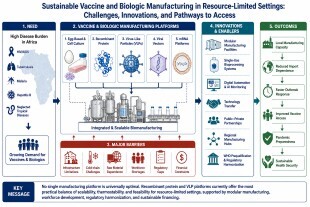
Manufacturing platforms for vaccines and biologic drugs in resource-limited settings: Challenges, innovations, and pathways to sustainable access
1
Department of Research, Global Empathy Project, Lusaka, Zambia
2
Department of Biomedical Science, University of Cape Coast, Cape Coast, Ghana
3
Tanzania Veterinary Laboratory Agency, Dar Es Salaam, Tanzania
4
Quality Assurance, Plus Five Pharmaceuticals, Bulawayo, Zimbabwe
5
Department of Public Health, Kwara State University, Malete, Nigeria
6
Reproductive Health Program, Pan African University Life and Earth Sciences Institute (including Health and Agriculture), University of Ibadan, Ibadan, Nigeria
Corresponding author

KEYWORDS
TOPICS
ABSTRACT
Introduction:
Demand for vaccines and biologics continues to rise across human and veterinary health, yet low-resource settings such as Africa carry a disproportionate burden of human immunodeficiency virus, hepatitis B, malaria, tuberculosis, and neglected tropical diseases. This review evaluates manufacturing technologies and strategies that can strengthen local production capacity to improve biologic access, pandemic preparedness, and outbreak response.
Methodology:
A structured narrative review was conducted, guided by the SANRA framework, using peer-reviewed literature published between 2015 and 2026 and retrieved from PubMed/Medline, Scopus, Web of Science, and Google Scholar, supplemented by relevant grey literature on biologics manufacturing in low-resource settings.
Results:
No single platform is universally optimal; selection should be matched to local capacity, target disease, and sustainability. Egg-based and cell-culture systems are accessible but limited in speed and scalability, while mRNA platforms adapt fastest yet depend on cold-chain and reagent infrastructure rarely available locally. Recombinant protein and virus-like particle platforms emerged as the most pragmatic compromise, combining thermostability with feasible bioprocessing. Across platforms, sustainable production depended less on the technology than on cross-cutting enablers: modular and single-use manufacturing, digital process control, regulatory harmonisation and World Health Organization prequalification, workforce development, and blended financing. Africa’s approximately 1% share of global vaccine supply underscores that equitable access requires these enablers to advance in coordination.
Conclusions:
Meeting the growing need for biologics requires capacity building, infrastructure investment, public-private partnerships, and dedicated funding reducing import dependence and improving pandemic readiness, as the coronavirus disease 2019 pandemic made clear.
Demand for vaccines and biologics continues to rise across human and veterinary health, yet low-resource settings such as Africa carry a disproportionate burden of human immunodeficiency virus, hepatitis B, malaria, tuberculosis, and neglected tropical diseases. This review evaluates manufacturing technologies and strategies that can strengthen local production capacity to improve biologic access, pandemic preparedness, and outbreak response.
Methodology:
A structured narrative review was conducted, guided by the SANRA framework, using peer-reviewed literature published between 2015 and 2026 and retrieved from PubMed/Medline, Scopus, Web of Science, and Google Scholar, supplemented by relevant grey literature on biologics manufacturing in low-resource settings.
Results:
No single platform is universally optimal; selection should be matched to local capacity, target disease, and sustainability. Egg-based and cell-culture systems are accessible but limited in speed and scalability, while mRNA platforms adapt fastest yet depend on cold-chain and reagent infrastructure rarely available locally. Recombinant protein and virus-like particle platforms emerged as the most pragmatic compromise, combining thermostability with feasible bioprocessing. Across platforms, sustainable production depended less on the technology than on cross-cutting enablers: modular and single-use manufacturing, digital process control, regulatory harmonisation and World Health Organization prequalification, workforce development, and blended financing. Africa’s approximately 1% share of global vaccine supply underscores that equitable access requires these enablers to advance in coordination.
Conclusions:
Meeting the growing need for biologics requires capacity building, infrastructure investment, public-private partnerships, and dedicated funding reducing import dependence and improving pandemic readiness, as the coronavirus disease 2019 pandemic made clear.
ACKNOWLEDGEMENTS
None
FUNDING
The authors have not received any financial support for this manuscript.
CONFLICT OF INTEREST
No conflicts of interest declared.
REFERENCES (89)
1.
Balmith M, Basson C, Brand SJ. The Malaria Burden: A South African Perspective. J Trop Med. 2024;2024:6619010. doi: 10.1155/2024/6619010.
2.
Leumi S, Bigna JJ, Amougou MA, Ngouo A, Nyaga UF, Noubiap JJ. Global Burden of Hepatitis B Infection in People Living With Human Immunodeficiency Virus: A Systematic Review and Meta-analysis. Clin Infect Dis. 2020;71(11):2799–2806. doi: 10.1093/cid/ciz1170.
3.
Harris RC, Sumner T, Knight GM, Zhang H, White RG. Potential impact of tuberculosis vaccines in China, South Africa, and India. Sci Transl Med. 2020;12(564):eaax4607. doi: 10.1126/scitranslmed.aax4607.
4.
Xie S, Xiao H, Xu L, Zhang F, Luo M. Decadal trends and regional disparities in tuberculosis burden: a comprehensive analysis of global, African, and Southeast Asian data from the GBD 1990–2021. Front Public Health. 2025;13:1467509. doi: 10.3389/fpubh.2025.1467509.
5.
Ochola EA, Karanja DMS, Elliott SJ. The impact of Neglected Tropical Diseases (NTDs) on health and wellbeing in sub-Saharan Africa (SSA): A case study of Kenya. PLoS Negl Trop Dis. 2021;15(2):e0009131. doi: 10.1371/journal.pntd.0009131.
6.
Lin Y, Fang K, Zheng Y, Wang HL, Wu J. Global burden and trends of neglected tropical diseases from 1990 to 2019. J Travel Med. 2022;29(3):taac031. doi: 10.1093/jtm/taac031.
7.
Gleason A, Impalli I, Sheen J, Cabezas Murillo A, Grenfell BT, Levin SA, et al. Global vaccination coverage and disease incidence in cattle, pigs, and poultry. Proc Natl Acad Sci U S A. 2025;122(52):e2515557122. doi: 10.1073/pnas.2515557122.
8.
Global vaccine market report 2024. Geneva: World Health Organization; 2024, doi: 10.2471/B09198. License: CC BY-NC-SA 3.0 IGO.
9.
Ecker DM, Seymour P. Supply and Demand Trends: Mammalian Biomanufacturing Industry Overview. Bioprocess Int. 2020; 18(11)E6. Available from: https://www.bdo.com/insights/i... [accessed on 14 April 2026].
10.
Wouters OJ, Shadlen KC, Salcher-Konrad M, Pollard AJ, Larson HJ, Teerawattananon Y, et al. Challenges in ensuring global access to COVID-19 vaccines: production, affordability, allocation, and deployment. Lancet. 2021;397(10278):1023–1034. doi: 10.1016/S0140-6736(21)00306-8.
11.
Yang X, Zhang L, Staykov K, Wu Z, Jaklenec A. Transforming drug and vaccine delivery for equitable access in global health. Biochem Biophys Res Commun. 2025;779:152415. doi: 10.1016/j.bbrc.2025.152415.
12.
Agampodi S, Mogeni OD, Chandler R, Pansuriya M, Kim JH, Excler JL. Global pandemic preparedness: learning from the COVID-19 vaccine development and distribution. Expert Rev Vaccines. 2024;23(1):761–772. doi: 10.1080/14760584.2024.2395546.
13.
Williams BA, Jones CH, Welch V, True JM. Outlook of pandemic preparedness in a post-COVID-19 world. NPJ Vaccines. 2023;8(1):178. doi: 10.1038/s41541-023-00773-0.
14.
Binagwaho A, Mutesi P, Mathewos K. Bolstering Vaccine Manufacturing Capacity in Africa: A move towards self-sufficiency. Brown J World Aff. 2021;28(1):1–16. Available from: https://bjwa.brown.edu/28-1/bo... [accessed on 14 August 2026].
15.
Zhang Y, Li H, Xu X, Antwi HA. On the momentum toward vaccine self-sufficiency in the BRICS: an integrative review of the role of pharmaceutical entrepreneurship and innovation. Front Public Health. 2023;11:1116092. doi: 10.3389/fpubh.2023.1116092.
16.
Khan AS. One size does not fit all- Strategizing the vaccine supply chain in developing countries. Oper Manag Res. 2024;17:941–962. doi: 10.1007/s12063-024-00479-z.
17.
Alakija A. Leveraging lessons from the COVID-19 pandemic to strengthen low-income and middle-income country preparedness for future global health threats. Lancet Infect Dis. 2023;23(8):e310–e317. doi: 10.1016/S1473-3099(23)00279-7.
18.
Fox A. Market Failure, State Failure: The Political Economy of Supply Chain Strengthening to Ensure Equitable Access to Vaccines and Medicines in Low- and Middle-Income Countries. J Health Polit Policy Law. 2024;49(1):43–72. doi: 10.1215/03616878-10910242.
19.
Chandipwisa C, Shimilimo A, Uwishema O, Onyeaka H. The Current Landscape and Future Prospects of Vaccine Manufacturing in Africa: Challenges, Innovations, and Opportunities: A Narrative Review. Health Sci Rep. 2026;9(3):e71926. doi: 10.1002/hsr2.71926.
20.
Baethge C, Goldbeck-Wood S, Mertens S. SANRA-a scale for the quality assessment of narrative review articles. Res Integr Peer Rev. 2019;4:5. doi: 10.1186/s41073-019-0064-8.
21.
Ferrari R. Writing narrative style literature reviews. Med Writing. 2015;24(4):230–235. doi: 10.1179/2047480615Z.000000000329.
22.
Ghattas M, Dwivedi G, Lavertu M, Alameh MG. Vaccine Technologies and Platforms for Infectious Diseases: Current Progress, Challenges, and Opportunities. Vaccines. 2021;9(12):1490. doi: 10.3390/vaccines9121490.
23.
Fan J, Jin S, Gilmartin L, Toth I, Hussein WM, Stephenson RJ. Advances in Infectious Disease Vaccine Adjuvants. Vaccines. 2022;10(7):1120. doi: 10.3390/vaccines10071120.
24.
Ng CS. Immunotherapy of Oncovirus-Induced Cancers: A Review on the Development and Efficacy of Targeted Vaccines. Vaccines. 2025;13(9):911. doi: 10.3390/vaccines13090911.
25.
Andey T, Soni S, Modi S. Conventional vaccination methods: Inactivated and live attenuated vaccines. In: Chavda VP, Vora LK, Apostolopoulos V [ed.]. Advanced Vaccination Technologies for Infectious and Chronic Diseases. Academic Press; 2024, p. 37–50. doi: 10.1016/B978-0-443-18564-9.00030-8.
26.
Shebl RI, Amer ME, Abuamara TMM, Matar ER, Ahmed HF, Gomah TA, et al. Staphylococcus aureus derived hyaluronic acid and bacillus Calmette-Guérin purified proteins as immune enhancers to rabies vaccine and related immuno-histopathological alterations. Clin Exp Vaccine Res. 2021;10(3):229–239. doi: 10.7774/cevr.2021.10.3.229.
27.
Tsilibary EP, Charonis SA, Georgopoulos AP. Vaccines for Influenza. Vaccines. 2021;9(1):47. doi: 10.3390/vaccines9010047.
28.
Abdelaziz K, Helmy YA, Yitbarek A, Hodgins DC, Sharafeldin TA, Selim MSH. Advances in Poultry Vaccines: Leveraging Biotechnology for Improving Vaccine Development, Stability, and Delivery. Vaccines. 2024;12(2):134. doi: 10.3390/vaccines12020134.
29.
Parvez S, Pathrathota A, Uppar AL, Ganesh Y, Mudavath SL. Influenza Virus: Global Health Impact, Strategies, Challenges, Role of Nanotechnolgy in Influenza Vaccine Development. Vaccines. 2025;13(9):890. doi: 10.3390/vaccines13090890.
30.
Al-Jumaili MHA, Siddique F, Abul Qais F, Hashem HE, Chtita S, Rani A, et al. Analysis and prediction pathways of natural products and their cytotoxicity against HeLa cell line protein using docking, molecular dynamics and ADMET. J Biomol Struct Dyn. 2023;41(3):765–777. doi: 10.1080/07391102.2021.2011785.
31.
de Pinho Favaro MT, Atienza-Garriga J, Martínez-Torró C, Parladé E, Vázquez E, Corchero JL, et al. Recombinant vaccines in 2022: a perspective from the cell factory. Microb Cell Fact. 2022;21(1):203. doi: 10.1186/s12934-022-01929-8.
32.
Gsell PS, Giersing B, Gottlieb S, Wilder-Smith A, Wu L, Friede M. Key considerations for the development of novel mRNA candidate vaccines in LMICs: A WHO/MPP mRNA Technology Transfer Programme meeting report. Vaccine. 2023;41(49):7307–7312. doi: 10.1016/j.vaccine.2023.10.027.
33.
Sparrow E, Hasso-Agopsowicz M, Kaslow DC, Singh K, Rao R, Chibi M, et al. Leveraging mRNA platform technology to accelerate development of vaccines for some emerging and neglected tropical diseases through local vaccine production. Front Trop Dis. 2022;3:844039. doi: 10.3389/fitd.2022.844039.
34.
Pardi N, Krammer F. mRNA vaccines for infectious diseases—advances, challenges and opportunities. Nat Rev Drug Discov. 2024;23(11):838–861. doi: 10.1038/s41573-024-01042-y .
35.
Mohsen MO, Bachmann MF. Virus-like particle vaccinology, from bench to bedside. Cell Mol Immunol. 2022;19(9):993–1011. doi: 10.1038/s41423-022-00897-8.
36.
Kis Z, Shattock R, Shah N, Kontoravdi C. Emerging technologies for low‐cost, rapid vaccine manufacture. Biotechnol J. 2019;14(1):1800376. doi: 10.1002/biot.201800376.
37.
Maehira Y, Spencer RC. Harmonization of biosafety and biosecurity standards for high-containment facilities in low- and middle-income countries: an approach from the perspective of occupational safety and health. Front Public Health. 2019;7:249. doi: 10.3389/fpubh.2019.00249.
38.
Maureen IA, Ugwu DC, Egwuenu A, Muhammad FS, David I. Challenges and Innovations of Vaccine Cold Chain Distribution in Developing Countries: A Narrative Review. Int J Res Sci Innov. 2026;12(12):1404–1417. doi: 10.51244/IJRSI.2025.12120121.
39.
Asmare Atalell K, Asmare Techane M, Adugna Wubneh C, Tezera Assimamaw N, Mulualem Belay G, Tarik Tamir T, et al. Spatiotemporal distributions of immunization coverage in Ethiopia from 2000 to 2019. Vaccine. 2022;40(10):1413–1420. doi: 10.1016/j.vaccine.2022.01.053.
40.
Sinnei DK, Karimi PN, Maru SM, Karengera S, Bizimana T. Evaluation of vaccine storage and distribution practices in rural healthcare facilities in Kenya. J Pharm Policy Pract. 2023;16(1):25. doi: 10.1186/s40545-023-00535-2.
41.
Kumar P, Choudhury D. Green Technologies: Theories, Systems, Principles and Applications. In: Ogwu MC, Chibueze Izah S [ed.]. Evaluating Environmental Processes and Technologies. Environmental Science and Engineering. Springer, Cham; 2025, p. 149–195. doi: 10.1007/978-3-031-85327-2_6.
42.
Mukasa B, Ali M, Farron M, Van de Weerdt R. Contraception supply chain challenges: a review of evidence from low- and middle-income countries. Eur J Contracept Reprod Health Care. 2017;22(5):384–390. doi: 10.1080/13625187.2017.1394453.
43.
Seidman G, Atun R. Does task shifting yield cost savings and improve efficiency for health systems? A systematic review of evidence from low-income and middle-income countries. Hum Resour Health. 2017;15(1):29. doi: 10.1186/s12960-017-0200-9.
44.
Diaconu K, Chen YF, Cummins C, Jimenez Moyao G, Manaseki-Holland S, Lilford R. Methods for medical device and equipment procurement and prioritization within low- and middle-income countries: findings of a systematic literature review. Global Health. 2017;13(1):59. doi: 10.1186/s12992-017-0280-2.
45.
Onsomu CB, Macharia JN, Mwangi SM. From Classroom to Workplace: The Combined Effects of Cognitive and Non-Cognitive Skills on Youth Labor Market Outcomes in Kenya. Economies. 2025;13(4):92. doi: 10.3390/economies13040092.
46.
Doua J, Ndembi N, Auerbach J, Kaseya J, Zumla A. Advancing local manufacturing capacities for vaccines within Africa – Opportunities, priorities and challenges. Vaccine. 2025;50:126829. doi: 10.1016/j.vaccine.2025.126829.
47.
Sayed Y, Singh M, Bulgrin E, Henry M, Williams D, Metcalfe M, et al. Teacher support, preparedness and resilience during times of crises and uncertainty: COVID-19 and education in the Global South. J Educ. 2021;84:125–154. doi: 10.17159/2520-9868/i84a07.
48.
Amponsah-Dacosta E, Muloiwa R, Wiysonge CS, Gold M, Hussey G, Kagina BM. Developing vaccinology expertise for Africa: fifteen years and counting. Pan Afr Med J. 2021;38:313. doi: 10.11604/pamj.2021.38.313.26744.
49.
Kumar RA, Dhar B. Trade liberalisation and export competitiveness of Indian manufacturing industries: some explanations. J Asia Pac Econ 2024;29:2191–2225. doi: 10.1080/13547860.2023.2202095.
50.
Isoko K, Cordiner JL, Kis Z, Moghadam PZ. Bioprocessing 4.0: a pragmatic review and future perspectives. Digit Discov. 2024;3(9):1662–1681. doi: 10.1039/d4dd00127c.
51.
Schwörer T, Jensen MB, Schou C, Dueholm BC, Andersen R, de Neergaard W, et al. Modular and reconfigurable factories for continuous production innovation in pharmaceutical manufacturing. Int J Prod Res. 2026;64(6):2210–2232. doi: 10.1080/00207543.2025.2575844.
52.
Samaras JJ, Micheletti M, Ding W. Transformation of Biopharmaceutical Manufacturing Through Single-Use Technologies: Current State, Remaining Challenges, and Future Development. Annu Rev Chem Biomol Eng. 2022;13:73–97. doi: 10.1146/annurev-chembioeng-092220-030223.
53.
Goggin M, Fleming A, MacMahon C, Owende P. Exploring the sustainability of single use plastics in the biopharmaceuticals sector: a scoping review of challenges, opportunities, and impacts. Front Sustain. 2025;6. doi: 10.3389/frsus.2025.1536382.
54.
Ton C, Stabile V, Carey E, Maraikar A, Whitmer T, Marrone S, et al. Development and scale-up of rVSV-SARS-CoV-2 vaccine process using single use bioreactor. Biotechnol Rep. 2023;37:e00782. doi: 10.1016/j.btre.2023.e00782.
55.
Schmidt A, Helgers H, Vetter FL, Zobel-Roos S, Hengelbrock A, Strube J. Process Automation and Control Strategy by Quality-by-Design in Total Continuous mRNA Manufacturing Platforms. Processes. 2022;10(9):1783. doi: 10.3390/pr10091783.
56.
Janghorban M, Kazemi S, Tormon R, Ngaju P, Pandey R. Methods and Analysis of Biological Contaminants in the Biomanufacturing Industry. Chemosensors. 2023;11(5):298. doi: 10.3390/chemosensors11050298.
57.
Magalhaes S, Keshavarz-Moore E. Building long-term vaccine manufacturing capacity for the world: a framework for sustainable development in LMICs. Vaccine Insights. 2025;4(6):191–208. doi: 10.18609/vac.2025.030.
58.
Kumraj G, Pathak S, Shah S, Majumder P, Jain J, Bhati D, et al. Capacity Building for Vaccine Manufacturing Across Developing Countries: The Way Forward. Hum Vaccin Immunother. 2022;18(1):2020529. doi: 10.1080/21645515.2021.2020529.
59.
Sinumvayo JP, Munezero PC, Tope AT, Adeyemo RO, Bale MI, Nyandwi JB, et al. Advancing Vaccinology Capacity: Education and Efforts in Vaccine Development and Manufacturing across Africa. Vaccines. 2024;12(7):741. doi: 10.3390/vaccines12070741.
60.
Hazan A, Lee HY, Tiong V, AbuBakar S. Bacillus subtilis Spores as a Vaccine Delivery Platform: A Tool for Resilient Health Defense in Low- and Middle-Income Countries. Vaccines. 2025;13(10):995. doi: 10.3390/vaccines13100995.
61.
Covarrubias CE, Rivera TA, Soto CA, Deeks T, Kalergis AM. Current GMP standards for the production of vaccines and antibodies: An overview. Front Public Health. 2022;10:1021905. doi: 10.3389/fpubh.2022.1021905.
62.
Lilley E, Bruysters M, Das P, Gill S, Isbrucker R, Jones D, et al. Integrating 3Rs approaches in WHO guidelines for the batch release testing of biologicals: Responses from a survey of National Control Laboratories and National Regulatory Authorities. Biologicals. 2023;84:101721. doi: 10.1016/j.biologicals.2023.101721.
63.
Struble EB, Rawson JMO, Stantchev T, Scott D, Shapiro MA. Uses and Challenges of Antiviral Polyclonal and Monoclonal Antibody Therapies. Pharmaceutics. 2023;15(5):1538. doi: 10.3390/pharmaceutics15051538.
64.
Du L, Wang M, Raposo VL. International Efforts and Next Steps to Advance COVID-19 Vaccines Research and Production in Low- and Middle-Income Countries. Vaccines. 2021;10(1):42. doi: 10.3390/vaccines10010042.
65.
Chattu VK, Dave VB, Reddy KS, Singh B, Sahiledengle B, Heyi DZ, et al. Advancing African Medicines Agency through Global Health Diplomacy for an Equitable Pan-African Universal Health Coverage: A Scoping Review. Int J Environ Res Public Health. 2021;18(22):11758. doi: 10.3390/ijerph182211758.
66.
Ismail AJ, Darko DM, Walker S, Salek S. The African Medicines Agency: historical perspective of its origins, evolution, institutional structure and future prospects. Front Med. 2026;13:1763261. doi: 10.3389/fmed.2026.1763261.
67.
Ndomondo-Sigonda M, Azatyan S, Doerr P, Agaba C, Harper KN. Best practices in the African Medicines Regulatory Harmonization initiative: Perspectives of regulators and medicines manufacturers. PLOS Glob Public Health. 2023;3(4):e0001651. doi: 10.1371/journal.pgph.0001651.
68.
Perehudoff K, Parwani P, Bruinsma S. Advancing vaccines justice through international regulatory pathways. Glob Public Health. 2025;20(1):2566730. doi: 10.1080/17441692.2025.2566730.
69.
Ndomondo-Sigonda M, Miot J, Naidoo S, Masota NE, Ng’andu B, Ngum N, et al. Harmonization of medical products regulation: a key factor for improving regulatory capacity in the East African Community. BMC Public Health. 2021;21(1):187. doi: 10.1186/s12889-021-10169-1.
70.
Song JY, Cheong HJ. Understanding the low effectiveness of influenza vaccines in older adults of South Korea: an exploration of contributing factors. Vaccine. 2026;71:128076. doi: 10.1016/j.vaccine.2025.128076.
71.
Beck F, Noll P, Schweiggert-Weisz U, Henkel M. Scientific and technological challenges of recombinant egg protein production. BMC Biotechnol. 2025;25(1):65. doi: 10.1186/s12896-025-01002-3.
72.
Schmidt A, Helgers H, Vetter FL, Juckers A, Strube J. Fast and Flexible mRNA Vaccine Manufacturing as a Solution to Pandemic Situations by Adopting Chemical Engineering Good Practice—Continuous Autonomous Operation in Stainless Steel Equipment Concepts. Processes. 2021;9(11):1874. doi: 10.3390/pr9111874.
73.
Kis Z. Stability Modelling of mRNA Vaccine Quality Based on Temperature Monitoring throughout the Distribution Chain. Pharmaceutics. 2022;14(2):430. doi: 10.3390/pharmaceutics14020430.
74.
Bartolo-Aguilar Y, Chávez-Cabrera C, Flores-Cotera LB, Badillo-Corona JA, Oliver-Salvador C, Marsch R. The potential of cold-shock promoters for the expression of recombinant proteins in microbes and mammalian cells. J Genet Eng Biotechnol. 2022;20(1):173. doi: 10.1186/s43141-022-00455-9.
75.
Poria R, Kala D, Nagraik R, Dhir Y, Dhir S, Singh B, et al. Vaccine development: Current trends and technologies. Life Sci. 2024;336:122331. doi: 10.1016/j.lfs.2023.122331.
76.
Soni SJ, Patel AN. Single-use technologies in bio manufacturing: benefits and implementation challenges. Asian J Hosp Pharm. 2024;4(4):1–7. doi: 10.38022/ajhp.v4i4.92.
77.
Russo L, Villani L, Ieraci R, Ricciardi W. Global Health Preparedness Frameworks and Recombinant Vaccine Platforms: A Public Health Perspective on Regulations and System Readiness. Vaccines. 2026;14(2):144. doi: 10.3390/vaccines14020144.
78.
Stein F, McNeill D. Blended finance to the rescue? Subsidies, vaccine bonds and matching funds in global health. Glob Public Health. 2025;20(1):2468338. doi: 10.1080/17441692.2025.2468338.
79.
Chahdoura A, Khefacha I, Mrabet N. Unraveling the relationship between entrepreneurial ecosystems and sustainable development: the mediating role of innovation in a macroeconomic panel data study. Int Rev Appl Econ. 2025;1–27. doi: 10.1080/02692171.2025.2568372.
80.
Rathore AS, Shereef F. The influence of domestic manufacturing capabilities on biologic pricing in emerging economies. Nat Biotechnol. 2019;37(5):498–501. doi: 10.1038/s41587-019-0116-0.
81.
Scheckel CJ, Vincent Rajkumar S. Drug importation: limitations of current proposals and opportunities for improvement. Blood Cancer J. 2021;11(7):132. doi: 10.1038/s41408-021-00522-3.
82.
Radhakrishnan P, SP D, GnK G. A Retrospective Analysis of FDA Warning Letters Issued For Biologics From 2010 To 2025. J Pharm Innov. 2025;20(6). doi: 10.1007/s12247-025-10123-3.
83.
Baylor NW. Role of the national regulatory authority for vaccines. Int J Health Gov. 2017;22(3):128–137. doi: 10.1108/IJHG-04-2017-0017.
84.
Ng CZ, Lean YL, Yeoh SF, Lean QY, Lee KS, Suleiman AK, et al. Cold chain time- and temperature-controlled transport of vaccines: a simulated experimental study. Clin Exp Vaccine Res. 2020;9(1):8–14. doi: 10.7774/cevr.2020.9.1.8.
85.
Kulchar RJ, Singh R, Ding S, Alexander E, Leong KW, Daniell H. Delivery of biologics: Topical administration. Biomaterials. 2023;302:122312. doi: 10.1016/j.biomaterials.2023.122312.
86.
Dubey AK, Gupta M. Importance of Quality Control in Biologicals. In: Misra G [ed.]. Quality Control and Regulatory Aspects for Biologicals: Regulations and Best Practices. 1st ed. CRC Press / Routledge; 2024, p. 15–29. doi: 10.1201/9781032697444-2.
87.
Fonseca EMD, Shadlen KC, Achcar HM. Vaccine technology transfer in a global health crisis: Actors, capabilities, and institutions. Res Policy. 2023;52(4):104739. doi: 10.1016/j.respol.2023.104739.
88.
Hernández Fernández F. Technology Transfer in the Health Sector: Between Voluntary Licenses and Competition. In: Nakagawa J, Hamada T, Ishikawa Y [ed.]. Geopolitical Risks and Geoeconomics in International Economic Law. Springer; 2026, p. 339–360. doi: 10.1007/978-981-95-6996-0_17.
89.
Omojuyigbe JO, Ade-Adekunle OA, Atobatele IR, Adekunle FO. How the African vaccine manufacturing accelerator can assist in strengthening Africa's response to global health challenges. Vaccine X. 2024;19:100499. doi: 10.1016/j.jvacx.2024.100499.
| eISSN: | 1734-025X |


The Medical University of Silesia in Katowice, as the Operator of the annales.sum.edu.pl website, processes personal data collected when visiting the website. The function of obtaining information about Users and their behavior is carried out by voluntarily entered information in forms, saving cookies in end devices, as well as by collecting web server logs, which are in the possession of the website Operator. Data, including cookies, are used to provide services in accordance with the Privacy policy.
You can consent to the processing of data for these purposes, refuse consent or access more detailed information.
You can consent to the processing of data for these purposes, refuse consent or access more detailed information.