Current issue
Accepted manuscript
About the Journal
Scientific Council
Editorial Board
Regulatory and archival policy
Code of publishing ethics
Publisher
Information about the processing of personal data in relation to cookies and newsletter subscription
Archive
For Authors
For Reviewers
Contact
Reviewers
Annals reviewers in 2025
Annals reviewers in 2024
Annals reviewers in 2023
Annals reviewers in 2022
Annals reviewers in 2021
Annals reviewers in 2020
Annals reviewers in 2019
Annals reviewers in 2018
Annals reviewers in 2017
Annals reviewers in 2016
Annals reviewers in 2015
Annals reviewers in 2014
Annals reviewers in 2013
Annals reviewers in 2012
Links
Sklep Wydawnictwa SUM
Biblioteka Główna SUM
Śląski Uniwersytet Medyczny w Katowicach
Privacy policy
Accessibility statement
Reviewers
Annals reviewers in 2025
Annals reviewers in 2024
Annals reviewers in 2023
Annals reviewers in 2022
Annals reviewers in 2021
Annals reviewers in 2020
Annals reviewers in 2019
Annals reviewers in 2018
Annals reviewers in 2017
Annals reviewers in 2016
Annals reviewers in 2015
Annals reviewers in 2014
Annals reviewers in 2013
Annals reviewers in 2012

Applications of machine learning methods in long COVID phenotyping: Review
1
Department of Infectious Diseases and Hepatology, Faculty of Medical Sciences in Zabrze, Medical University of Silesia, Katowice, Poland
2
Students’ Scientific Association, Department of Immunology, Faculty of Medical Science, University of Rzeszów, Poland
Corresponding author
Martyna Szlenk
Katedra i Klinika Chorób Zakaźnych i Hepatologii, Górnośląskie Centrum Medyczne im. prof. Leszka Gieca ŚUM, ul. Ziołowa 45/47, 40-635 Katowice
Katedra i Klinika Chorób Zakaźnych i Hepatologii, Górnośląskie Centrum Medyczne im. prof. Leszka Gieca ŚUM, ul. Ziołowa 45/47, 40-635 Katowice

KEYWORDS
post-acute COVID-19 syndromeCOVID-19SARS-CoV-2post-COVID conditionsmachine learninglong COVID phenotypes
TOPICS
ABSTRACT
Introduction:
Long COVID (LC) is one of the major challenges of modern medicine. The lack of standardized diagnostic criteria, nonspecific symptoms, their temporal variability and chronic nature significantly hinder diagnosis and classification. This creates the need for advanced technological tools to better understand the pathophysiology and identify individual disease phenotypes. Artificial intelligence, particularly machine learning (ML), is a promising approach. This review synthesises current evidence on ML applications in LC phenotyping and outlines core ML concepts relevant to this research context.
Material and methods:
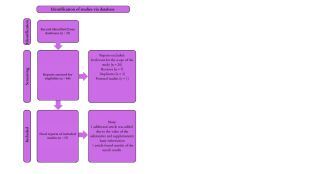
A search of the PubMed database identified 47 articles published through July 9, 2024. After manual screening of titles and abstracts, 17 studies published in English were included in the final analysis.
Results:
We present an overview of ML applications in LC research, focusing on the identification of phenotypes, subphenotypes and risk factors associated with LC occurrence and severity. The identified phenotypes depict LC as a multisystem condition, in which symptom clusters often involve multiple organ systems rather than a single organ.
Conclusions:
ML represents a useful tool for identifying LC patients and classifying them into distinct subphenotypes characterized by different clinical manifestations. This approach improves the precision of diagnostic pathways and supports individualized therapeutic strategies. ML approaches may also improve clinical trial design by facilitating analysis of large, heterogeneous datasets – a particular advantage given LC's variable clinical course.
Long COVID (LC) is one of the major challenges of modern medicine. The lack of standardized diagnostic criteria, nonspecific symptoms, their temporal variability and chronic nature significantly hinder diagnosis and classification. This creates the need for advanced technological tools to better understand the pathophysiology and identify individual disease phenotypes. Artificial intelligence, particularly machine learning (ML), is a promising approach. This review synthesises current evidence on ML applications in LC phenotyping and outlines core ML concepts relevant to this research context.
Material and methods:
A search of the PubMed database identified 47 articles published through July 9, 2024. After manual screening of titles and abstracts, 17 studies published in English were included in the final analysis.
Results:
We present an overview of ML applications in LC research, focusing on the identification of phenotypes, subphenotypes and risk factors associated with LC occurrence and severity. The identified phenotypes depict LC as a multisystem condition, in which symptom clusters often involve multiple organ systems rather than a single organ.
Conclusions:
ML represents a useful tool for identifying LC patients and classifying them into distinct subphenotypes characterized by different clinical manifestations. This approach improves the precision of diagnostic pathways and supports individualized therapeutic strategies. ML approaches may also improve clinical trial design by facilitating analysis of large, heterogeneous datasets – a particular advantage given LC's variable clinical course.
REFERENCES (39)
1.
Sarmiento Varón L, González-Puelma J, Medina-Ortiz D, Aldridge J, Alvarez-Saravia D, Uribe-Paredes R, et al. The role of machine learning in health policies during the COVID-19 pandemic and in long COVID management. Front Public Health. 2023;11:1140353. doi: 10.3389/fpubh.2023.1140353.
2.
Habehh H, Gohel S. Machine Learning in Healthcare. Curr Genomics. 2021;22(4):291–300. doi: 10.2174/1389202922666210705124359.
3.
Rubinger L, Gazendam A, Ekhtiari S, Bhandari M. Machine learning and artificial intelligence in research and healthcare. Injury. 2023;54 Suppl 3:S69–S73. doi: 10.1016/j.injury.2022.01.046.
4.
Chafai N, Bonizzi L, Botti S, Badaoui B. Emerging applications of machine learning in genomic medicine and healthcare. Crit Rev Clin Lab Sci. 2024;61(2):140–163. doi: 10.1080/10408363.2023.2259466.
5.
Sarker IH. Machine Learning: Algorithms, Real-World Applications and Research Directions. SN Comput Sci. 2021;2(3):160. doi: 10.1007/s42979-021-00592-x.
6.
Mintz Y, Brodie R. Introduction to artificial intelligence in medicine. Minim Invasive Ther Allied Technol. 2019;28(2):73–81. doi: 10.1080/13645706.2019.1575882.
7.
An Q, Rahman S, Zhou J, Kang JJ. A Comprehensive Review on Machine Learning in Healthcare Industry: Classification, Restrictions, Opportunities and Challenges. Sensors (Basel). 2023;23(9):4178. doi: 10.3390/S23094178.
8.
Jayatilake SMDAC, Ganegoda GU. Involvement of Machine Learning Tools in Healthcare Decision Making. J Healthc Eng. 2021;2021:6679512. doi: 10.1155/2021/6679512.
9.
Eckhardt CM, Madjarova SJ, Williams RJ, Ollivier M, Karlsson J, Pareek A, et al. Unsupervised machine learning methods and emerging applications in healthcare. Knee Surg Sports Traumatol Arthrosc. 2023;31(2):376–381. doi: 10.1007/s00167-022-07233-7.
10.
Njeri R. Data Preparation for Machine Learning Modelling. Int J Comput Appl Technol Res. 2022;11(06):231–235. doi: 10.7753/IJCATR1106.1008.
11.
Masmoudi O, Jaoua M, Jaoua A, Yacout S. Data Preparation in Machine Learning for Condition-based Maintenance. J Comput Sci. 2021;17(6):525–538. doi: 10.3844/jcssp.2021.525.538.
12.
Pratheesh R, Divya V. Feature Extraction to Evaluate the Quality of Data Using Machine Learning Technique. In: 2024 Third International Conference on Distributed Computing and Electrical Circuits and Electronics (ICDCECE). IEEE; 2024, p. 01–05. doi: 10.1109/ICDCECE60827.2024.10549606.
13.
A Semary N, Ahmed W, Amin K, Pławiak P, Hammad M. Enhancing machine learning-based sentiment analysis through feature extraction techniques. PLoS One. 2024;19(2):e0294968. doi: 10.1371/journal.pone.0294968.
14.
Browning NJ, Ramakrishnan R, von Lilienfeld OA, Roethlisberger U. Genetic Optimization of Training Sets for Improved Machine Learning Models of Molecular Properties. J Phys Chem Lett. 2017;8(7):1351–1359. doi: 10.1021/acs.jpclett.7b00038.
15.
Kolasa K, Admassu B, Hołownia-Voloskova M, Kędzior KJ, Poirrier JE, Perni S. Systematic reviews of machine learning in healthcare: a literature review. Expert Rev Pharmacoecon Outcomes Res. 2024;24(1):63–115. doi: 10.1080/14737167.2023.2279107.
16.
Miotto R, Wang F, Wang S, Jiang X, Dudley JT. Deep learning for healthcare: review, opportunities and challenges. Brief Bioinform. 2018;19(6):1236–1246. doi: 10.1093/bib/bbx044.
17.
Kriegeskorte N, Golan T. Neural network models and deep learning. Curr Biol. 2019;29(7):R231–R236. doi: 10.1016/j.cub.2019.02.034.
18.
Esteva A, Robicquet A, Ramsundar B, Kuleshov V, DePristo M, Chou K, et al. A guide to deep learning in healthcare. Nat Med. 2019;25(1):24–29. doi: 10.1038/s41591-018-0316-z.
19.
Ngiam KY, Khor IW. Big data and machine learning algorithms for health-care delivery. Lancet Oncol. 2019;20(5):e262–e273. doi: 10.1016/S1470-2045(19)30149-4.
20.
Piccolo SR, Mecham A, Golightly NP, Johnson JL, Miller DB. The ability to classify patients based on gene-expression data varies by algorithm and performance metric. PLoS Comput Biol. 2022;18(3):e1009926. doi: 10.1371/journal.pcbi.1009926.
21.
de Lacy N, Ramshaw MJ, Kutz JN. Integrated Evolutionary Learning: An Artificial Intelligence Approach to Joint Learning of Features and Hyperparameters for Optimized, Explainable Machine Learning. Front Artif Intell. 2022;5:832530. doi: 10.3389/frai.2022.832530.
22.
Rainio O, Teuho J, Klén R. Evaluation metrics and statistical tests for machine learning. Sci Rep. 2024;14(1):6086. doi: 10.1038/s41598-024-56706-x.
23.
Zhang H, Zang C, Xu Z, Zhang Y, Xu J, Bian J, et al. Data-driven identification of post-acute SARS-CoV-2 infection subphenotypes. Nat Med. 2023;29(1):226–235. doi: 10.1038/s41591-022-02116-3.
24.
Estiri H, Strasser ZH, Brat GA, Semenov YR; Consortium for Characterization of COVID-19 by EHR (4CE); Chirag J Patel, Shawn N Murphy. Evolving Phenotypes of non-hospitalized Patients that Indicate Long Covid. medRxiv [Preprint]. 2021;2021.04.25.21255923. doi: 10.1101/2021.04.25.21255923.
25.
Gentilotti E, Górska A, Tami A, Gusinow R, Mirandola M, Rodríguez Baño J, et al. Clinical phenotypes and quality of life to define post-COVID-19 syndrome: a cluster analysis of the multinational, prospective ORCHESTRA cohort. EClinicalMedicine. 2023;62:102107. doi: 10.1016/j.eclinm.2023.102107.
26.
Canas LS, Molteni E, Deng J, Sudre CH, Murray B, Kerfoot E, et al. Profiling post-COVID-19 condition across different variants of SARS-CoV-2: a prospective longitudinal study in unvaccinated wild-type, unvaccinated alpha-variant, and vaccinated delta-variant populations. Lancet Digit Health. 2023;5(7):e421–e434. doi: 10.1016/S2589-7500(23)00056-0.
27.
Kisiel MA, Lee S, Malmquist S, Rykatkin O, Holgert S, Janols H, et al. Clustering Analysis Identified Three Long COVID Phenotypes and Their Association with General Health Status and Working Ability. J Clin Med. 2023;12(11):3617. doi: 10.3390/jcm12113617.
28.
Socia D, Larie D, Feuerwerker S, An G, Cockrell C. Prediction of Long COVID Based on Severity of Initial COVID-19 Infection: Differences in predictive feature sets between hospitalized versus non-hospitalized index infections. medRxiv [Preprint]. 2023;2023.01.16.23284634. doi: 10.1101/2023.01.16.23284634.
29.
Reese JT, Blau H, Casiraghi E, Bergquist T, Loomba JJ, Callahan TJ, et al. Generalisable long COVID subtypes: findings from the NIH N3C and RECOVER programmes. EBioMedicine. 2023;87:104413. doi: 10.1016/j.ebiom.2022.104413.
30.
Epsi NJ, Chenoweth JG, Blair PW, Lindholm DA, Ganesan A, Lalani T, et al. Precision Symptom Phenotyping Identifies Early Clinical and Proteomic Predictors of Distinct COVID-19 Sequelae. J Infect Dis. 2025;232(1):39–49. doi: 10.1093/infdis/jiae318.
31.
Epsi NJ, Powers JH, Lindholm DA, Mende K, Malloy A, Ganesan A, et al. A machine learning approach identifies distinct early-symptom cluster phenotypes which correlate with hospitalization, failure to return to activities, and prolonged COVID-19 symptoms. PLoS One. 2023;18(2):e0281272. doi: 10.1371/journal.pone.0281272.
32.
Klein J, Wood J, Jaycox JR, Dhodapkar RM, Lu P, Gehlhausen JR, et al. Distinguishing features of long COVID identified through immune profiling. Nature. 2023;623(7985):139–148. doi: 10.1038/s41586-023-06651-y.
33.
Ma T, Suryawanshi RK, Miller SR, Ly KK, Thomas R, Elphick N, et al. Post-acute immunological and behavioral sequelae in mice after Omicron infection. bioRxiv [Preprint]. 2023;2023.06.05.543758. doi: 10.1101/2023.06.05.543758.
34.
Wang K, Khoramjoo M, Srinivasan K, Gordon PMK, Mandal R, Jackson D, et al. Sequential multi-omics analysis identifies clinical phenotypes and predictive biomarkers for long COVID. Cell Rep Med. 2023;4(11):101254. doi: 10.1016/j.xcrm.2023.101254.
35.
Prabhakaran D, Day GS, Munipalli B, Rush BK, Pudalov L, Niazi SK, et al. Neurophenotypes of COVID-19: Risk factors and recovery outcomes. Brain Behav Immun Health. 2023;30:100648. doi: 10.1016/j.bbih.2023.100648.
36.
Lorman V, Razzaghi H, Song X, Morse K, Utidjian L, Allen AJ, et al. A machine learning-based phenotype for long COVID in children: An EHR-based study from the RECOVER program. PLoS One. 2023;18(8):e0289774. doi: 10.1371/journal.pone.0289774.
37.
Sonnweber T, Tymoszuk P, Sahanic S, Boehm A, Pizzini A, Luger A, et al. Investigating phenotypes of pulmonary COVID-19 recovery: A longitudinal observational prospective multicenter trial. Elife. 2022;11:e72500. doi: 10.7554/eLife.72500.
38.
Ayadi H, Bour C, Fischer A, Ghoniem M, Fagherazzi G. The Long COVID experience from a patient’s perspective: a clustering analysis of 27,216 Reddit posts. Front Public Health. 2023;11:1227807. doi: 10.3389/fpubh.2023.1227807.
39.
Pfaff ER, Girvin AT, Crosskey M, Gangireddy S, Master H, Wei WQ, et al. De-black-boxing health AI: demonstrating reproducible machine learning computable phenotypes using the N3C-RECOVER Long COVID model in the All of Us data repository. J Am Med Inform Assoc. 2023;30(7):1305–1312. doi: 10.1093/jamia/ocad077.
Share
RELATED ARTICLE
| eISSN: | 1734-025X |


The Medical University of Silesia in Katowice, as the Operator of the annales.sum.edu.pl website, processes personal data collected when visiting the website. The function of obtaining information about Users and their behavior is carried out by voluntarily entered information in forms, saving cookies in end devices, as well as by collecting web server logs, which are in the possession of the website Operator. Data, including cookies, are used to provide services in accordance with the Privacy policy.
You can consent to the processing of data for these purposes, refuse consent or access more detailed information.
You can consent to the processing of data for these purposes, refuse consent or access more detailed information.