Current issue
Accepted manuscript
About the Journal
Scientific Council
Editorial Board
Regulatory and archival policy
Code of publishing ethics
Publisher
Information about the processing of personal data in relation to cookies and newsletter subscription
Archive
For Authors
For Reviewers
Contact
Reviewers
Annals reviewers in 2025
Annals reviewers in 2024
Annals reviewers in 2023
Annals reviewers in 2022
Annals reviewers in 2021
Annals reviewers in 2020
Annals reviewers in 2019
Annals reviewers in 2018
Annals reviewers in 2017
Annals reviewers in 2016
Annals reviewers in 2015
Annals reviewers in 2014
Annals reviewers in 2013
Annals reviewers in 2012
Links
Sklep Wydawnictwa SUM
Biblioteka Główna SUM
Śląski Uniwersytet Medyczny w Katowicach
Privacy policy
Accessibility statement
Reviewers
Annals reviewers in 2025
Annals reviewers in 2024
Annals reviewers in 2023
Annals reviewers in 2022
Annals reviewers in 2021
Annals reviewers in 2020
Annals reviewers in 2019
Annals reviewers in 2018
Annals reviewers in 2017
Annals reviewers in 2016
Annals reviewers in 2015
Annals reviewers in 2014
Annals reviewers in 2013
Annals reviewers in 2012

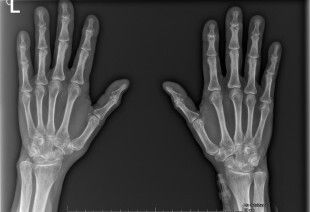
Overlap of rheumatoid arthritis flare and Yersinia-induced reactive arthritis: A clinical case and literature review
1
Students’ Scientific Club at the Department of Internal Medicine, Metabolic Diseases and Angiology, Faculty of Health Sciences in Katowice, Medical University of Silesia, Katowice, Poland
2
Department of Internal Medicine, Metabolic Diseases and Angiology, Faculty of Health Sciences in Katowice, Medical University of Silesia, Katowice, Poland
These authors had equal contribution to this work
Corresponding author
Ewa Pękala
Klinika Chorób Wewnętrznych, Metabolicznych i Angiologii, Górnośląskie Centrum Medyczne im. prof. Leszka Gieca ŚUM, ul. Ziołowa 45/47, 40-635 Katowice
Klinika Chorób Wewnętrznych, Metabolicznych i Angiologii, Górnośląskie Centrum Medyczne im. prof. Leszka Gieca ŚUM, ul. Ziołowa 45/47, 40-635 Katowice
Ann. Acad. Med. Siles. 2026;80:233-237

KEYWORDS
TOPICS
ABSTRACT
Yersiniosis is a zoonotic bacterial disease caused by Yersinia enterocolitica (Y. enterocolitica) and Yersinia pseudotuberculosis, which can lead to the development of extraintestinal inflammatory complications, including reactive arthritis. In patients with rheumatoid arthritis (RA), Yersinia infection may mimic a disease flare or coexist with an exacerbation, thereby posing a significant diagnostic challenge. This study presents the case of a 61-year-old woman with seronegative RA in long-term clinical remission, who was hospitalized due to an abrupt worsening of joint symptoms, high fever, and gastrointestinal complaints. Laboratory tests revealed extremely elevated levels of inflammatory markers, including C-reactive protein, ferritin, and D-dimers, as well as neutrophilia with concomitant lymphopenia and significantly elevated titers of anti-Y. enterocolitica IgM, IgA, and IgG antibodies. Imaging studies revealed enlarged mesenteric lymph nodes, further supporting the infectious etiology. A comprehensive clinical and laboratory assessment indicated the coexistence of two parallel pathophysiological processes – an autoimmune exacerbation of RA and Yersinia-associated reactive arthritis. Initiation of the antibiotic therapy in combination with anti-inflammatory and immunomodulatory treatment resulted in significant clinical improvement and gradual normalization of laboratory parameters. This case highlights the importance of considering bacterial infections, particularly those caused by Y. enterocolitica, in the differential diagnosis of RA flares, especially when systemic inflammatory activity is disproportionately high relative to articular manifestations. Early diagnosis and initiation of etiological treatment can prevent disease progression and irreversible joint damage.
Use of AI tools statement: AI tools (ChatGPT) were used to support the assessment and correction of the text for clarity and grammar.
REFERENCES (11)
1.
Zeidler H, Hudson AP. Reactive Arthritis Update: Spotlight on New and Rare Infectious Agents Implicated as Pathogens. Curr Rheumatol Rep. 2021;23(7):53. doi: 10.1007/s11926-021-01018-6.
2.
Honda K, Iwanaga N, Izumi Y, Tsuji Y, Kawahara C, Michitsuji T, et al. Reactive Arthritis Caused by Yersinia enterocolitica Enteritis. Intern Med. 2017;56(10):1239–1242. doi: 10.2169/internalmedicine.56.7888.
3.
Abdullah HM, Oberoi M, Abdalla A, Narayana Gowda S, Ellithi M. Yersinia enterocolitica Prosthetic Joint Septic Arthritis Successfully Treated with Ceftriaxone. Case Rep Infect Dis. 2021;2021:5547577. doi: 10.1155/2021/5547577.
4.
Shafiee D, Salpynov Z, Gusmanov A, Khuanbai Y, Mukhatayev Z, Kunz J. Enteric Infection-Associated Reactive Arthritis: A Systematic Review and Meta-Analysis. J Clin Med. 2024;13(12):3433. doi: 10.3390/jcm13123433.
5.
Jahid M, Khan KU, Rehan-Ul-Haq, Ahmed RS. Overview of Rheumatoid Arthritis and Scientific Understanding of the Disease. Mediterr J Rheumatol. 2023;34(3):284–291. doi: 10.31138/mjr.20230801.oo.
6.
Afrasiabi S, Chiniforush N, Partoazar A, Goudarzi R. The role of bacterial infections in rheumatoid arthritis development and novel therapeutic interventions: Focus on oral infections. J Clin Lab Anal. 2023;37(8):e24897. doi: 10.1002/jcla.24897.
7.
Alam J, Jantan I, Bukhari SNA. Rheumatoid arthritis: Recent advances on its etiology, role of cytokines and pharmacotherapy. Biomed Pharmacother. 2017;92:615–633. doi: 10.1016/j.biopha.2017.05.055.
8.
Klareskog L, Rönnelid J, Saevarsdottir S, Padyukov L, Alfredsson L. The importance of differences; On environment and its interactions with genes and immunity in the causation of rheumatoid arthritis. J Intern Med. 2020;287(5):514–533. doi: 10.1111/joim.13058.
9.
Jura-Półtorak A, Olczyk K. Current opinions on etiopathogenesis of rheumatoid arthritis. [Article in Polish]. Ann Acad Med Siles. 2011;65(4):51–57.
10.
D’Orazio A, Cirillo AL, Greco G, Di Ruscio E, Latorre M, Pisani F, et al. Pathogenesis of rheumatoid arthritis: one year in review 2024. Clin Exp Rheumatol. 2024;42(9):1707–1713. doi: 10.55563/clinexprheumatol/0307ed.
11.
Sparks JA. Rheumatoid Arthritis. Ann Intern Med. 2019;170(1):ITC1-ITC16. doi: 10.7326/AITC201901010.
Share
RELATED ARTICLE
| eISSN: | 1734-025X |


The Medical University of Silesia in Katowice, as the Operator of the annales.sum.edu.pl website, processes personal data collected when visiting the website. The function of obtaining information about Users and their behavior is carried out by voluntarily entered information in forms, saving cookies in end devices, as well as by collecting web server logs, which are in the possession of the website Operator. Data, including cookies, are used to provide services in accordance with the Privacy policy.
You can consent to the processing of data for these purposes, refuse consent or access more detailed information.
You can consent to the processing of data for these purposes, refuse consent or access more detailed information.