Bieżący numer
Artykuły zaakceptowane
O czasopiśmie
Rada Naukowa
Kolegium Redakcyjne
Polityka prawno-archiwizacyjna
Kodeks etyki publikacyjnej
Wydawca
Informacja o przetwarzaniu danych osobowych w ramach plików cookies oraz subskrypcji newslettera
Archiwum
Dla autorów
Dla recenzentów
Kontakt
Recenzenci
Recenzenci rocznika 2025
Recenzenci rocznika 2024
Recenzenci rocznika 2023
Recenzenci rocznika 2022
Recenzenci rocznika 2021
Recenzenci rocznika 2020
Recenzenci rocznika 2019
Recenzenci rocznika 2018
Recenzenci rocznika 2017
Recenzenci rocznika 2016
Recenzenci rocznika 2015
Recenzenci rocznika 2014
Recenzenci rocznika 2013
Recenzenci rocznika 2012
Polecamy
Śląski Uniwersytet Medyczny w Katowicach
Sklep Wydawnictw SUM
Biblioteka Główna SUM
Polityka prywatności
Deklaracja dostępności
Recenzenci
Recenzenci rocznika 2025
Recenzenci rocznika 2024
Recenzenci rocznika 2023
Recenzenci rocznika 2022
Recenzenci rocznika 2021
Recenzenci rocznika 2020
Recenzenci rocznika 2019
Recenzenci rocznika 2018
Recenzenci rocznika 2017
Recenzenci rocznika 2016
Recenzenci rocznika 2015
Recenzenci rocznika 2014
Recenzenci rocznika 2013
Recenzenci rocznika 2012

Aplikacje na telefony komórkowe stosowane do monitorowania zwyrodnienia plamki żółtej związanego z wiekiem
1
Department of Health Economics and Health Management, Faculty of Public Health in Bytom, Medical University of Silesia, Katowice, Poland
2
Ophthalmology Department, District Municipal Hospital in Ruda Slaska, Poland
Autor do korespondencji
Anna Rogalska
Zakład Ekonomiki i Zarządzania w Ochronie Zdrowia, Wydział Zdrowia Publicznego w Bytomiu, ul. Piekarska 18, 41-902 Bytom
Zakład Ekonomiki i Zarządzania w Ochronie Zdrowia, Wydział Zdrowia Publicznego w Bytomiu, ul. Piekarska 18, 41-902 Bytom
Ann. Acad. Med. Siles. 2025;79:17-23

SŁOWA KLUCZOWE
zwyrodnienie plamki związane z wiekiemAMDaplikacja mobilnae-zdrowie w okulistycemobilne monitorowanie pacjentamobile healthocena użyteczności
DZIEDZINY
STRESZCZENIE
Wprowadzenie:
Zwyrodnienie plamki żółtej związane z wiekiem (age-related macular degeneration – AMD) jest główną przyczyną utraty wzroku u osób starszych. Celem badania była analiza praktycznej wartości dostępnych aplikacji mobilnych służących do monitorowania AMD.
Materiał i metody:
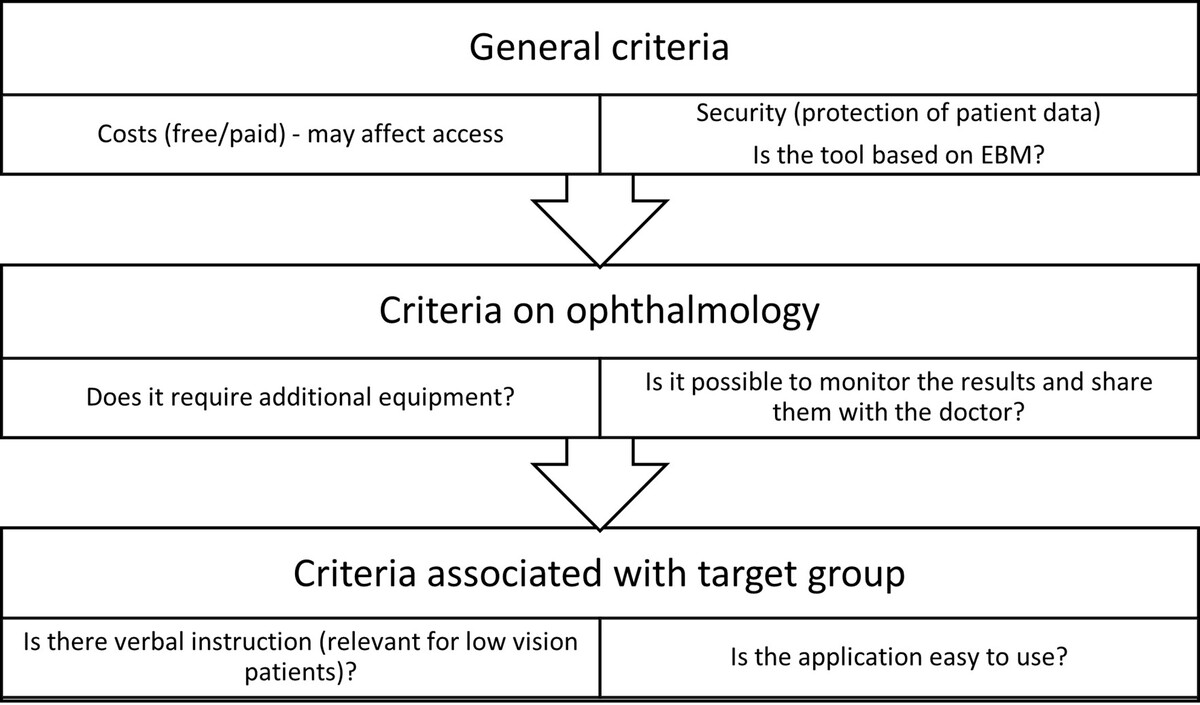
W okresie od 1 do 31 marca 2023 r. przeprowadzono analizę ilościową i jakościową aplikacji na smartfony – dostępnych w języku polskim i angielskim w sklepie Google Play – z użyciem słów kluczowych „zwyrodnienie plamki żółtej związane z wiekiem” i „AMD”. Analiza obejmowała cztery kryteria jakościowe, oceniane w skali od 0 do 2 punktów każde: 1) możliwość monitorowania choroby, 2) ochrona danych użytkownika, 3) dostępność instrukcji ustnych oraz 4) użyteczność aplikacji. Na podstawie łącznej liczby punktów wyróżniono pięć poziomów jakości aplikacji: bardzo wysoki (8 pkt), wysoki (7 pkt), średni (6 pkt), poniżej średniego (5 pkt) oraz niski (≤ 4 pkt). Okulista przetestował każdą aplikację spełniającą kryteria włączenia.
Wyniki:
Spośród 249 zidentyfikowanych aplikacji tylko 14 spełniło kryteria włączenia do analizy. Spośród nich dwie scharakteryzowano jako bardzo wysokiej jakości, trzy jako wysokiej jakości (żadna z nich nie była w języku polskim), jedną jako średniej jakości i osiem jako niskiej jakości. Tylko dwie z 14 aplikacji odpowiadały potrzebom pacjentów z AMD, takim jak ograniczenia widzenia i stosowanie instrukcji ustnych.
Wnioski:
Dostępne aplikacje w języku polskim nie oferowały żadnej wartości dodanej w porównaniu z tradycyjnym papierowym testem Amslera. Aby aplikacje mobilne skutecznie pomagały w monitorowaniu AMD, należy nadać priorytet kluczowym aspektom, takim jak dostępność (najlepiej bezpłatna) i jakość, w tym bezpieczeństwo danych. Utworzenie zespołów ewaluacyjnych, w których skład weszliby eksperci medyczni, specjaliści ds. IT i przedstawiciele pacjentów, usprawniłoby rozwój i ocenę aplikacji mobilnych ukierunkowanych na monitorowanie AMD.
Zwyrodnienie plamki żółtej związane z wiekiem (age-related macular degeneration – AMD) jest główną przyczyną utraty wzroku u osób starszych. Celem badania była analiza praktycznej wartości dostępnych aplikacji mobilnych służących do monitorowania AMD.
Materiał i metody:
W okresie od 1 do 31 marca 2023 r. przeprowadzono analizę ilościową i jakościową aplikacji na smartfony – dostępnych w języku polskim i angielskim w sklepie Google Play – z użyciem słów kluczowych „zwyrodnienie plamki żółtej związane z wiekiem” i „AMD”. Analiza obejmowała cztery kryteria jakościowe, oceniane w skali od 0 do 2 punktów każde: 1) możliwość monitorowania choroby, 2) ochrona danych użytkownika, 3) dostępność instrukcji ustnych oraz 4) użyteczność aplikacji. Na podstawie łącznej liczby punktów wyróżniono pięć poziomów jakości aplikacji: bardzo wysoki (8 pkt), wysoki (7 pkt), średni (6 pkt), poniżej średniego (5 pkt) oraz niski (≤ 4 pkt). Okulista przetestował każdą aplikację spełniającą kryteria włączenia.
Wyniki:
Spośród 249 zidentyfikowanych aplikacji tylko 14 spełniło kryteria włączenia do analizy. Spośród nich dwie scharakteryzowano jako bardzo wysokiej jakości, trzy jako wysokiej jakości (żadna z nich nie była w języku polskim), jedną jako średniej jakości i osiem jako niskiej jakości. Tylko dwie z 14 aplikacji odpowiadały potrzebom pacjentów z AMD, takim jak ograniczenia widzenia i stosowanie instrukcji ustnych.
Wnioski:
Dostępne aplikacje w języku polskim nie oferowały żadnej wartości dodanej w porównaniu z tradycyjnym papierowym testem Amslera. Aby aplikacje mobilne skutecznie pomagały w monitorowaniu AMD, należy nadać priorytet kluczowym aspektom, takim jak dostępność (najlepiej bezpłatna) i jakość, w tym bezpieczeństwo danych. Utworzenie zespołów ewaluacyjnych, w których skład weszliby eksperci medyczni, specjaliści ds. IT i przedstawiciele pacjentów, usprawniłoby rozwój i ocenę aplikacji mobilnych ukierunkowanych na monitorowanie AMD.
REFERENCJE (40)
1.
Fleckenstein M., Keenan T.D.L., Gfuymer R.H., Chakravarthy U., Schmitz-Valckenberg S., Klaver C.C. et al. Age-related macular degeneration. Nat. Rev. Dis. Primers 2021; 7(1): 31, doi: 10.1038/s41572-021-00265-2.
2.
Age-Related Macular Degeneration (AMD). National Eye Institute, 2021 [online] https://www.nei.nih.gov/learn-... [accessed on 14 September 2023].
3.
Keenan T.D.L., Cukras C.A., Chew E.Y. Age-related macular degeneration: epidemiology and clinical aspects. Adv. Exp. Med. Biol. 2021; 1256: 1–31, doi: 10.1007/978-3-030-66014-7_1.
4.
Ayoub T., Patel N. Age-related macular degeneration. J. R. Soc. Med. 2009; 102(2): 56–61, doi: 10.1258/jrsm.2009.080298.
5.
Wong W.L., Su X., Li X., Cheung C.M., Klein R., Cheng C.Y. et al. Global prevalence of age-related macular degeneration and disease burden projection for 2020 and 2040: a systematic review and meta-analysis. Lancet Glob. Health 2014; 2(2): e106–116, doi: 10.1016/S2214-109X(13)70145-1.
6.
Lambert N.G., ElShelmani H., Singh M.K., Mansergh F.C., Wride M.A., Padilla M. et al. Risk factors and biomarkers of age-related macular degeneration. Prog. Retin. Eye Res. 2016; 54: 64–102, doi: 10.1016/j.preteyeres.2016.04.003.
7.
Fritsche L.G., Igl W., Bailey J.N., Grassmann F., Sengupta S., Bragg-Gresham J.L. et al. A large genome-wide association study of age-related macular degeneration highlights contributions of rare and common variants. Nat. Genet. 2016; 48(2): 134–143, doi: 10.1038/ng.3448.
8.
Pennington K.L., DeAngelis M.M. Epidemiology of age-related macular degeneration (AMD): associations with cardiovascular disease phenotypes and lipid factors. Eye Vis. (Lond.) 2016; 3: 34, doi: 10.1186/s40662-016-0063-5.
9.
Heesterbeek T.J. Lorés-Motta L., Hoyng C.B., Lechanteur Y.T.E., den Hollander A.I. Risk factors for progression of age-related macular degeneration. Ophthalmic Physiol. Opt. 2020; 40(2): 140–170, doi: 10.1111/opo.12675.
10.
Shim S.H., Kim S.G., Bae J.H., Yu H.G., Song S.J. et al. Risk factors for progression of early age-related macular degeneration in Koreans. Ophthalmic Epidemiol. 2016; 23(2): 80–87, doi: 10.3109/09286586.2015.1129425.
11.
Merle B.M.J., Colijn J.M., Cougnard-Grégoire A., de Koning-Backus A.P.M., Delyfer M.N., Kiefte-de Jong J.C. et al. Mediterranean diet and incidence of advanced age-related macular degeneration: The EYE-RISK Consortium. Ophthalmology 2019; 126(3): 381–390, doi: 10.1016/j.ophtha.2018.08.006.
12.
Merle B.M., Silver R.E., Rosner B., Seddon J.M. Adherence to a Mediterranean diet, genetic susceptibility, and progression to advanced macular degeneration: a prospective cohort study. Am. J. Clin. Nutr. 2015; 102(5): 1196–1206, doi: 10.3945/ajcn.115.111047.
13.
Coronado B.N.L., da Cunha F.B.S., de Oliveira R.M., Nóbrega O.T., Ricart C.A.O., Fontes W. et al. Novel possible protein targets in neovascular age-related macular degeneration: a pilot study experiment. Front. Med. (Lausanne) 2021; 8: 692272, doi: 10.3389/fmed.2021.692272.
14.
Gu B.J., Huang X., Avula P.K., Caruso E., Drysdale C., Vessey K.A. et al. Deficits in monocyte function in age related macular degeneration: a novel systemic change associated with the disease. Front. Med. (Lausanne) 2021; 8: 634177, doi: 10.3389/fmed.2021.634177.
15.
VanDenLangenberg A.M., Carson M.P. Drusen Bodies. In: StatPearls [Internet]. Treasure Island (FL): StatPearls Publishing 2023, [online] https://www.ncbi.nlm.nih.gov/b... [accessed on 14 September 2024].
16.
Ayhan I., Doyle E., Zanker J. Measuring image distortions arising from age-related macular degeneration: An Iterative Amsler Grid (IAG). MedComm. (2020) 2022; 3(1): e107, doi: 10.1002/mco2.107.
17.
Sim S.S., Yip M.Y., Wang Z., Tan A.C.S., Tan G.S.W., Cheung C.M.G. et al. Digital technology for AMD management in the post-COVID-19 new normal. Asia Pac. J. Ophthalmol. (Phila.) 2021; 10(1): 39–48, doi: 10.1097/APO.0000000000000363.
18.
Crossland M., Rubin G. The Amsler chart: absence of evidence is not evidence of absence. Br. J. Ophthalmol. 2007; 91(3): 391–393, doi: 10.1136/bjo.2006.095315.
19.
Choritz L., Hoffmann M., Thieme H. Telemedical applications in ophthalmology in times of COVID-19. [Article in German]. Ophthalmologe 2021; 118(9): 885–892, doi: 10.1007/s00347-021-01470-w.
20.
Dorsey E.R., Topol E.J. State of telehealth. N. Engl. J. Med. 2016; 375(14): 1400, doi: 10.1056/NEJMc1610233.
21.
Gioia G., Salducci M. Medical and legal aspects of telemedicine in ophthalmology. Rom. J. Ophthalmol. 2019; 63(3): 197–207.
22.
Gupta A., Cavallerano J., Sun J.K., Silva P.S. Evidence for telemedicine for diabetic retinal disease. Semin. Ophthalmol. 2017; 32(1): 22–28, doi: 10.1080/08820538.2016.1228403.
23.
Sharma M., Jain N., Ranganathan S., Sharma N., Honavar S.G., Sharma N. et al. Tele-ophthalmology: Need of the hour. Indian J. Ophthalmol. 2020; 68(7): 1328–1338, doi: 10.4103/ijo.IJO_1784_20.
24.
Liu Y., Zupan N.J., Swearingen R., Jacobson N., Carlson J.N., Mahoney J.E. et al. Identification of barriers, facilitators and system-based implementation strategies to increase teleophthalmology use for diabetic eye screening in a rural US primary care clinic: a qualitative study. BMJ Open 2019; 9(2): e022594, doi: 10.1136/bmjopen-2018-022594.
25.
Mansberger S.L., Sheppler C., Barker G., Gardiner S.K., Demirel S. et al. Long-term comparative effectiveness of telemedicine in providing diabetic retinopathy screening examinations: a randomized clinical trial. JAMA Ophthalmol. 2015; 133(5): 518–525, doi: 10.1001/jamaophthalmol.2015.1.
26.
Agarwal P., Gordon D., Griffith J., Kithulegoda N., Witteman H.O., Sacha Bhatia R. et al. Assessing the quality of mobile applications in chronic disease management: a scoping review. NPJ Digit. Med. 2021; 4(1): 46, doi: 10.1038/s41746-021-00410-x.
27.
Liew M.S., Zhang J., See J., Ong Y.L. Usability challenges for health and wellness mobile apps: mixed-methods study among mHealth experts and consumers. JMIR Mhealth Uhealth 2019; 7(1): e12160, doi: 10.2196/12160.
28.
Skrzypecki J., Stanska K., Grabska-Liberek I. Patient-oriented mobile applications in ophthalmology. Clin. Exp. Optom. 2019; 102(2): 180–183, doi: 10.1111/cxo.12830.
29.
Lombardo M., Serrao S., Lombardo G. Challenges in Age-related macular degeneration: from risk factors to novel diagnostics and prevention strategies. Front. Med. (Lausanne) 2022; 9: 887104, doi: 10.3389/fmed.2022.887104.
30.
Hamine S., Gerth-Guyette E., Faulx D., Green B.B., Ginsburg A.S. Impact of mHealth chronic disease management on treatment adherence and patient outcomes: a systematic review. J. Med. Internet Res. 2015; 17(2): e52, doi: 10.2196/jmir.3951.
31.
Llorens-Vernet P., Miró J. The Mobile App Development and Assessment Guide (MAG): Delphi-based validity study. JMIR Mhealth Uhealth 2020; 8(7): e17760, doi: 10.2196/17760.
32.
Huckvale K., Prieto J.T., Tilney M., Benghozi P.J., Car J. Unaddressed privacy risks in accredited health and wellness apps: a cross-sectional systematic assessment. BMC Med. 2015; 13: 214, doi: 10.1186/s12916-015-0444-y.
33.
Byambasuren O., Sanders S., Beller E., Glasziou P. Prescribable mHealth apps identified from an overview of systematic reviews. NPJ Digit. Med. 2018; 1: 12, doi: 10.1038/s41746-018-0021-9.
34.
Khurana R.N., Hoang C., Khanani A.M., Steklov N., Singerman L.J. A smart mobile application to monitor visual function in diabetic retinopathy and age-related macular degeneration: The CLEAR study. Am. J. Ophthalmol. 2021; 227: 222–230, doi: 10.1016/j.ajo.2021.03.033.
35.
Yu H.J., Kiernan D.F., Eichenbaum D., Sheth V.S., Wykoff C.C. Home monitoring of age-related macular degeneration: utility of the ForeseeHome device for detection of neovascularization. Ophthalmol. Retina 2021; 5(4): 348–356, doi: 10.1016/j.oret.2020.08.003.
36.
Schmid M.K. Thiel M.A., Lienhard K., Schlingemann R.O., Faes L., Bachmann L.M. Reliability and diagnostic performance of a novel mobile app for hyperacuity self-monitoring in patients with age-related macular degeneration. Eye (Lond.) 2019; 33(10): 1584–1589, doi:10.1038/s41433-019-0455-6.
37.
Gross N., Bachmann L.M., Islam M., Faes L., Schmid M.K., Thiel M.A. et al. Visual outcomes and treatment adherence of patients with macular pathology using a mobile hyperacuity home-monitoring app: a matched-pair analysis. BMJ Open 2021; 11(12): e056940, doi: 10.1136/bmjopen-2021-056940.
38.
Islam M., Sansome S., Das R., Lukic M., Chong Teo K.Y., Tan G. et al. Smartphone-based remote monitoring of vision in macular disease enables early detection of worsening pathology and need for intravitreal therapy. BMJ Health Care Inform. 2021; 28(1): e100310, doi: 10.1136/bmjhci-2020-100310.
39.
Chen J.S., Adelman R.A. Hyperacuity exam screens for choroidal neovascularization in age-related macular degeneration on a mobile device. Ophthalmic Surg. Lasers Imaging Retina 2016; 47(8): 708–715, doi: 10.3928/23258160-20160808-03.
40.
Tseng R.M.W.W., Tham Y.C., Rim T.H., Cheng C.Y. Emergence of non-artificial intelligence digital health innovations in ophthalmology: A systematic review. Clin. Exp. Ophthalmol. 2021; 49(7): 741–756, doi: 10.1111/ceo.13971.
CYTOWANIA (1):
1.
The Amsler Grid in Everyday Practice: A Review of Its Role and Limitations in Primary Care
Agata Estreicher, Kamil Biedka, Katarzyna Błaszczyk, Michał Wesołowski, Jakub Bulski, Aleksandra Sobaś, Oliwia Ziobro, Filip Maj, Karol Sornat, Anna Klasa, Kacper Żełabowski, Jakub Karwacki, Tadeusz Sebzda
Clinical Ophthalmology
Agata Estreicher, Kamil Biedka, Katarzyna Błaszczyk, Michał Wesołowski, Jakub Bulski, Aleksandra Sobaś, Oliwia Ziobro, Filip Maj, Karol Sornat, Anna Klasa, Kacper Żełabowski, Jakub Karwacki, Tadeusz Sebzda
Clinical Ophthalmology
Udostępnij
ARTYKUŁ POWIĄZANY
| eISSN: | 1734-025X |


Śląski Uniwersytet Medyczny w Katowicach, jako Operator Serwisu annales.sum.edu.pl, przetwarza dane osobowe zbierane podczas odwiedzania Serwisu. Realizacja funkcji pozyskiwania informacji o Użytkownikach i ich zachowaniu odbywa się poprzez dobrowolnie wprowadzone w formularzach informacje, zapisywanie w urządzeniach końcowych plików cookies (tzw. ciasteczka), a także poprzez gromadzenie logów serwera www, będącego w posiadaniu Operatora Serwisu. Dane, w tym pliki cookies, wykorzystywane są w celu realizacji usług zgodnie z Polityką prywatności.
Możesz wyrazić zgodę na przetwarzanie danych w tych celach, odmówić zgody lub uzyskać dostęp do bardziej szczegółowych informacji.
Możesz wyrazić zgodę na przetwarzanie danych w tych celach, odmówić zgody lub uzyskać dostęp do bardziej szczegółowych informacji.